


What Is a Recurring Appointment? Meaning, Examples, and Best Tools


Booking the same sessions again and again can be tiring. You talk to a client, agree on a schedule, and then spend time fixing dates for every single meeting. This is common for coaches, tutors, therapists, and consultants. And honestly, it takes more time than it should.
This is where recurring appointments come in.
If you work with the same client regularly, this can change how you manage your time. It helps you stay organized, reduces back-and-forth messages, and keeps both you and your clients on track.
In this article, we will explain what a recurring appointment is, who needs it, and how different businesses use it in real life.
What Does a Recurring Appointment Mean?
A recurring appointment means a meeting that repeats on a fixed schedule. You set the time and date once, and the appointment happens again and again without booking it every time. This is useful when you meet the same person regularly.
A one-time appointment happens only once. After that, it is done. If you want to meet again, you have to book a new slot. A recurring appointment saves you from doing that extra work. Everything is planned in advance.
Recurring appointments usually follow a simple pattern. Some meetings happen every week. Some happen every two weeks. Others are monthly or even yearly. The schedule stays the same unless you change it.
This makes recurring appointments a smart choice for anyone who works with clients on a regular basis.
Benefits of Using Recurring Appointments
Recurring appointments make daily work easier for service professionals. They remove many small tasks that take up time and energy.
- Saves time: You set the schedule once, and you are done. There is no need to book the same session again and again.
- Reduces manual work: You do not have to send messages, confirm dates, or update calendars every time. Everything stays organized automatically.
- Avoids missed sessions: When sessions follow a fixed schedule, both you and your clients know exactly when to show up. This reduces no-shows and confusion.
- Creates a better client experience: Clients like clarity. A recurring schedule helps them plan ahead and feel more comfortable.
- Helps businesses look more professional: A clear and consistent booking system builds trust. It shows that you value time and run your business smoothly.
Businesses That Use Recurring Appointments the Most
Recurring appointments are most useful for service-based businesses. These businesses work with the same clients on a regular schedule.
Coaches (life, business, fitness)
Coaches usually meet clients weekly or monthly. A life coach may run weekly calls. A fitness coach may offer regular training sessions. Recurring appointments help coaches keep sessions consistent without extra booking work.
Therapists and Counselors
Therapy often follows a fixed routine. Many clients attend sessions on the same day each week. Weekly recurring appointments make sure sessions stay on track, and nothing gets missed.
Consultants
Consultants often work with clients for long periods. They may have monthly review calls or regular strategy meetings. A recurring schedule keeps everything planned and professional.
Tutors and Trainers
Tutors and trainers usually teach on a set timetable. Weekly classes or repeated lessons are common. Recurring appointments make scheduling simple for both the tutor and the learner.
How Recurring Appointments Work
Recurring appointments are simple to set up and easy to manage.
First, you set the schedule once. You choose the day, time, and how often the meeting should repeat. This could be daily, weekly, monthly, or any fixed pattern.
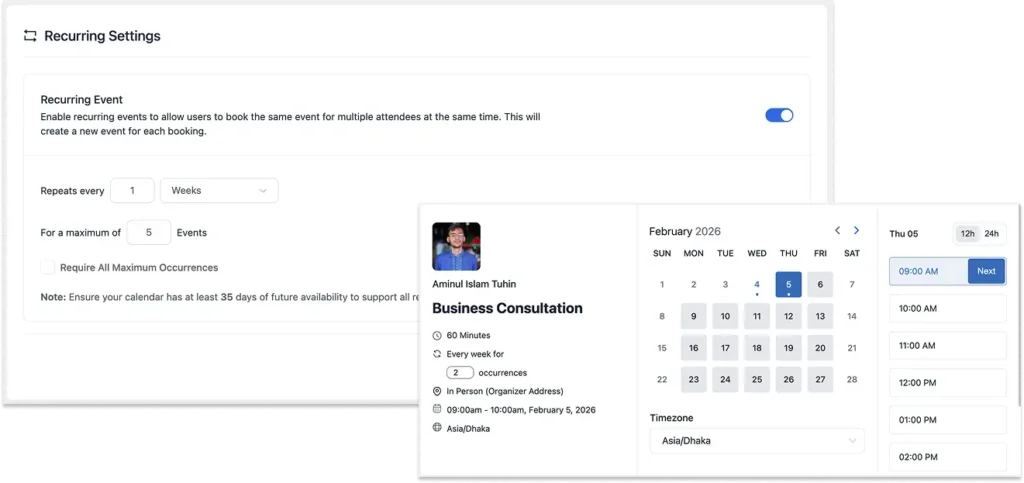
Once the schedule is set, the appointments repeat automatically. You do not need to create each session one by one. The system takes care of it for you.
Automation matters because it removes human error. It saves time, avoids confusion, and keeps everything running smoothly without extra effort.
Bonus: Check this complete guideline on how to set up recurring events in your WordPress website.
Best Software for Scheduling Recurring Appointments
When you choose a tool for recurring appointments, look for a few key things:
- Easy setup: You should be able to create your schedule in minutes without tech skills.
- Automatic reminders: The tool should send reminders to you and your clients so no one forgets a session.
- Calendar sync: Your appointments should match your calendar (like Google or Outlook) to avoid clashes.
Here are some popular tools you might consider:
- FluentBooking (for WordPress users): FluentBooking is a WordPress plugin that helps you set up your booking system right on your own site. You can sync with calendars, collect client info, and send automatic confirmations and reminders. It supports recurring bookings and keeps everything in one place.
- Calendly: Calendly is simple and easy to use. You set your available times, share a booking link, and clients pick a time that works. It syncs with major calendars and can send reminders. It also supports recurring appointments in its system.
- Acuity Scheduling: Acuity is a powerful tool that works well for service professionals. It offers strong calendar sync, client booking pages, and automatic reminders. It also handles recurring appointments and lets you gather client information easily.
Wrapping It All Up
Recurring appointments make scheduling simple and stress-free. In this article, you learned what a recurring appointment is, who needs it, and which businesses use it the most. You also saw real-life examples and got familiar with tools that help manage recurring sessions easily.
If you meet the same clients regularly, it is worth looking at how you handle your bookings today. Think about the time you spend on messages, follow-ups, and manual scheduling. A recurring setup can remove much of that work.
You do not need to change everything at once. Start small. Try a recurring appointment tool like FluentBooking and see how it fits into your workflow. Once it is in place, managing regular sessions becomes much easier for both you and your clients.
Aminul Islam Tuhin
Hi! Nice to meet you. I’m a guy who loves to explore, learn, and share knowledge. I spend most of my time catching up with marketing tips & tricks. When I’m not busy with any of these, you’ll find me with a book, exploring the city, or playing my favorite games.
Table of Content
Subscribe To Get
WordPress Guides, Tips, and Tutorials




Leave a Reply