

What Is a Discovery Call? Meaning, Process, Questions & Examples (2026)


You’ve got a potential client interested in your service. Maybe they filled out a form, sent a message, or asked about your pricing. You could jump straight into pitching your offer.
But here’s the problem.
Not every lead is the right fit. And if you skip the conversation, you risk wasting time, misaligned expectations, or losing the deal altogether.
That’s where a discovery call comes in.
It’s a simple step, but it can completely change how you qualify leads, build trust, and close clients. In this guide, you’ll learn what a discovery call is, how it works, and how to use it effectively without overcomplicating the process.
What Is a Discovery Call?
A discovery call is a short conversation with a potential client where you ask questions to understand their needs, challenges, and goals. It helps you decide whether you’re a good fit to work together before offering your service.
A discovery call usually happens early in your sales or onboarding process. Instead of jumping straight into selling, you take a step back and focus on understanding the person you’re talking to.
For example, a freelance designer might use a discovery call to understand a client’s project goals before creating a proposal. A coach might use it to learn about a client’s challenges before recommending a program.
In simple terms, it’s not about selling. It’s about understanding first.
Discovery Call Synonyms & Related Terms
You might not always hear the term “discovery call.”
Depending on the industry or context, people use different names for the same type of conversation.
Here are some common alternatives:
- Qualification call – focuses on determining if the lead is a good fit
- Consultation call – often used by coaches and service providers
- Assessment call – emphasizes understanding the client’s current situation
- Strategy session – used when the call includes light guidance or direction
- Initial consultation – common in professional services like coaching or healthcare
Understanding these terms helps you in two ways:
- You’ll recognize discovery calls even when they’re called something else
- You can use the term that best fits your audience or service
Why Discovery Calls Matter
A discovery call is more than just a quick chat. It sets the direction for everything that comes next.
If you skip this step, you’re guessing. And guessing often leads to wrong clients, unclear expectations, and wasted time.
Here’s why discovery calls matter:
- Focus on the right clients: Not every lead is worth your time. A discovery call helps you quickly understand who is a good fit and who isn’t, so you can avoid chasing the wrong opportunities.
- You uncover real needs (not assumptions): Many clients don’t clearly explain their problems upfront. A discovery call helps you dig deeper, so you can understand what they actually need, not just what they say they want.
- Build trust from the first interaction: Before someone buys from you, they need to feel understood. A discovery call shows that you’re listening, not just trying to sell.
- Make your offer more relevant: When you understand the client’s goals, challenges, and expectations, your proposal becomes more specific and easier to say yes to.
- Avoid problems later in the process: A good discovery call brings clarity early. It helps you uncover things like expectations, budget, or decision-making upfront, so you don’t run into surprises later.
A discovery call helps you understand first, then decide, instead of jumping straight into selling.
Key Characteristics of a Discovery Call
Not every call with a potential client is a discovery call. What makes it different is how the conversation is handled and what the goal is.
Here are the key characteristics that define a true discovery call:
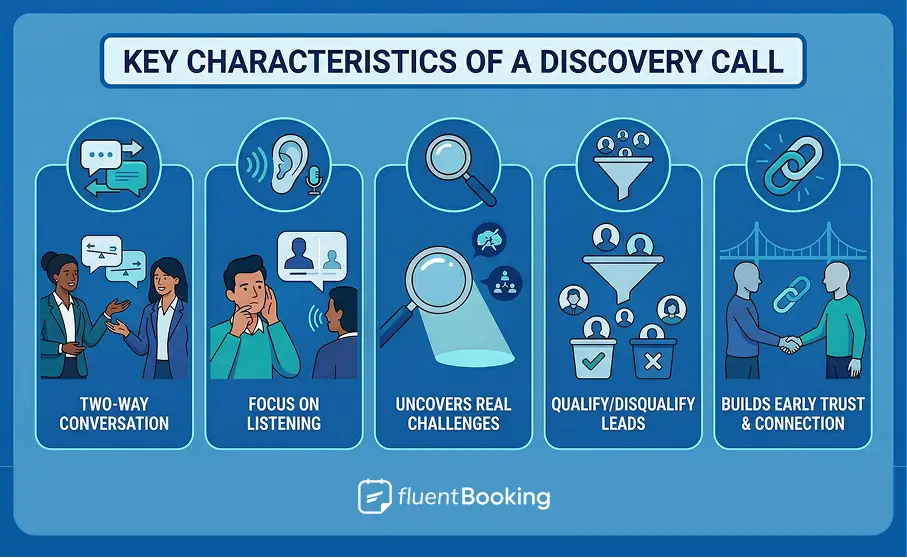
It’s a two-way conversation
A discovery call isn’t a one-sided pitch.
Both you and the client are involved. You ask questions, they share insights, and the conversation flows naturally. The goal is to explore, not present.
It focuses on listening, not selling
This is where most people get it wrong.
A discovery call is not the time to explain your service in detail. It’s time to listen carefully and understand the client’s situation.
A good rule: the client should be talking more than you.
It uncovers real challenges
Clients often describe surface-level problems.
Your role is to go a bit deeper and understand what’s actually causing those issues. This is what helps you offer a solution that truly fits.
It helps you qualify or disqualify leads
Not every conversation should lead to a sale.
A discovery call helps you decide:
- Is this client a good fit?
- Can you actually help them?
- Is it worth moving forward?
Sometimes, the best outcome is a clear “no.”
It builds early trust and connection
This is often your first real interaction with a potential client.
How you listen, respond, and guide the conversation sets the tone for everything that follows. When done right, it makes the next step feel natural.
A discovery call is not about proving your value. It’s about understanding the client first and deciding if there’s a fit.
When Should You Use a Discovery Call?
A discovery call isn’t needed for every situation.
But in the right moments, it can save you hours of back-and-forth and prevent costly mistakes.
Here are the most common situations where a discovery call makes sense:
- Before sending a proposal: If you send proposals without understanding the client properly, you’re guessing. A discovery call helps you gather the right details so your proposal is clear, relevant, and more likely to get approved.
- Before discussing pricing: Talking about price too early can lead to confusion or pushback. A discovery call allows you to understand the scope first, so you can explain your pricing with context and confidence.
- When the client’s needs are unclear: Sometimes a lead reaches out, but their request is vague. Instead of assuming what they want, a discovery call helps you clarify their goals, challenges, and expectations.
- For high-value or custom services: If your service involves strategy, customization, or long-term work, a discovery call is essential. It ensures both you and the client are aligned before committing.
- When you want to qualify leads: Not every lead is worth pursuing. A discovery call helps you filter out poor-fit clients early, so you can focus your time on the right opportunities.
In simple words, use a discovery call when you need clarity, alignment, and confidence before moving forward.
How to Run a Successful Discovery Call in 7 Simple Steps
A discovery call isn’t about following a script word-for-word. It’s about having a structured conversation that helps you understand the client and decide what to do next.
Once you know the flow, you can adapt it to your own style. Here’s how a typical discovery call works:
Do A Quick Background Check
Before the call, take a few minutes to understand who you’re talking to.
Look at:
- Their website or social profile
- What they do and who they serve
- Why they might need your help
You don’t need deep research. Even basic context helps you ask smarter questions and avoid generic conversations.
Start With A Clear Introduction
The first few minutes set the tone. Keep it simple and natural:
- Introduce yourself
- Mention what you do
- Explain what you’d like to cover on the call
For example, you might say you’ll ask a few questions, understand their situation, and then decide if it makes sense to move forward.
This makes the call feel structured and comfortable from the start.
Build A Bit Of Rapport
Before jumping into questions, take a moment to make the conversation feel human.
This doesn’t mean forced small talk. Just be friendly and present:
- Acknowledge how they found you
- Mention something relevant about their work
- Keep your tone relaxed and conversational
When the client feels comfortable, they’re more likely to open up honestly.
Ask The Right Questions And Listen Carefully
This is the most important part of the call.
Your goal is to understand:
- What they’re trying to achieve
- What challenges they’re facing
- What they’ve already tried
Ask open-ended questions and give them space to talk. Avoid interrupting or rushing to give advice.
A good rule to follow: listen more than you speak.
Take Notes And Identify Key Insights
As the client shares details, capture the important points.
Focus on:
- Their main problem
- Their goals or desired outcome
- Any constraints like budget or timeline
You don’t need to write everything down, just the details that will help you move forward.
These notes will be useful when creating a proposal or planning your next step.
Evaluate If It’s The Right Fit
As the conversation unfolds, you should start forming a clear picture.
Ask yourself:
- Can I genuinely help this person?
- Does their problem match what I offer?
- Are their expectations realistic?
Remember, a discovery call works both ways. It’s not just about them choosing you; it’s also about you choosing the right clients.
Close With A Clear Next Step
Before ending the call, avoid leaving things open-ended.
Summarize what you discussed and clearly define what happens next:
- Will you send a proposal?
- Schedule another call?
- Or decide not to continue?
Clarity here builds trust and keeps things moving forward.
What Questions to Ask During a Discovery Call
One of the main goals of a discovery call is to understand and qualify your potential client.
And that depends entirely on the questions you ask.
Instead of asking everything at once, prepare your questions in advance and bring them into the conversation naturally. This keeps the call smooth and helps build a real connection.
Here are the key questions you should cover:
Questions About Goals And Priorities
Start by understanding what they’re trying to achieve.
- What goals is your business or team working toward right now?
- What would a successful outcome look like for you?
This gives you direction for the rest of the conversation.
Questions about challenges and pain points
Next, dig into what’s not working.
- What main roadblocks or challenges are you facing?
- What’s been the most frustrating part of this process?
This is where you uncover the real problem behind the request.
Questions About Past Solutions
Understanding their past helps you avoid repeating mistakes.
- What have you tried so far?
- What worked and what didn’t?
This gives you valuable context before suggesting anything.
Questions About The Current Setup
Now get a clearer picture of their situation.
- How are you currently handling this?
- What tools or systems are you using?
This helps you identify gaps and opportunities.
Questions About Decision-Making
You also need to understand how decisions are made.
- Who has the final say in choosing a solution?
- Is anyone else involved in the decision Process?
This helps you navigate the next steps more effectively.
Questions About The Budget
You don’t need to push hard, but clarity helps.
- Do you have a budget range in mind?
This ensures your solution aligns with their expectations.
Questions About Next Steps
Before ending the call, guide the conversation forward.
- Do you have any questions or concerns I can address?
- Would you like to move forward with the next step?
Always leave the call with a clear direction.
Simple Takeaway
Good discovery call questions follow a natural flow:
goals → challenges → past → current → decision → budget → next steps
Pro tip: Don’t treat this like a checklist. Use these questions as a guide and adapt them based on the conversation. The more natural it feels, the better the results.
Stop Selling, Start Understanding
A discovery call is the essential bridge between a lead and a loyal client. It’s not about rushing to pitch your service; it’s about shifting your focus to deep understanding.
By using a structured approach, from preparation and building rapport to asking insightful questions about goals, challenges, and budget, you gain the clarity needed to determine mutual fit.
Embrace the discovery call as a qualifying tool that builds trust, avoids misaligned expectations, and ensures you spend your valuable time on the opportunities most likely to lead to success.
Frequently Asked Questions
Ratul Ripon
I enjoy making complex ideas simple and engaging through my writing and designs. With a strong knowledge on content writing and SEO, I create technical content that’s both easy to understand and interesting.
Table of Content
Subscribe To Get
WordPress Guides, Tips, and Tutorials





Leave a Reply