

20 Best Yoga Marketing Ideas to Grow Your Studio Faster in 2026


Running a successful yoga studio requires more than just excellent instruction and a peaceful space; it requires a solid marketing strategy.
Whether you’re just starting out or looking to grow an established studio, the right marketing approach can help you attract new students, build community, and create sustainable business growth.
In this comprehensive guide, we’ll explore actionable yoga marketing ideas specifically designed for studio owners and entrepreneurs. These strategies are practical, cost-effective, and proven to work across different studio sizes and styles.
Why Yoga Studio Marketing Matters in 2026?
The yoga industry is growing fast, creating more opportunities, but also more competition. According to Grand View Research, the global yoga market was valued at USD 127 billion in 2025 and is projected to reach USD 269.1 billion by 2033, growing at a CAGR of 9.9%.
As yoga becomes a lifestyle choice for health, stress relief, and mental well-being, more studios are entering the market. Most students now discover studios through Google, Google Business Profile, Instagram, reviews, and even AI tools like ChatGPT, not just word of mouth.
That’s why yoga studio marketing is no longer optional. And a strong strategy helps you attract new students, retain loyal members, and grow your studio consistently.
Before You Start: Define Your Target Audience and Niche
Before you invest time in SEO, social media, or paid ads, you need clarity on two things:
- Who you want to attract
- What makes your yoga studio different
Your target audience shapes every part of your marketing. A studio focused on prenatal yoga will market very differently from one offering power yoga for athletes or restorative yoga for stress relief.
Start by understanding your ideal student. Ask yourself:
- Are they beginners or experienced practitioners?
- Are they looking for fitness, flexibility, or stress relief?
- Do they want community, healing, or performance-focused training?
- What problem are they trying to solve through yoga?
Once you know who you serve, define your niche, your clear focus within the larger yoga market.
Your niche could be beginner-friendly yoga, prenatal yoga, senior wellness yoga, corporate wellness programs, hot yoga for fitness-focused students, restorative yoga for stress management, traditional styles like Ashtanga or Kundalini, etc.
The more specific your positioning, the easier your marketing becomes.
20 Proven Yoga Studio Marketing Ideas to Grow Your Studio
Successful yoga studios do more than teach great classes; they understand exactly who their ideal students are and how to reach them. A strong marketing strategy helps you attract new members, build trust, and create long-term growth without relying only on word of mouth.
The goal is not to do everything at once. Start with the strategies that match your studio best, stay consistent, and improve based on what works. Here are 10 proven yoga marketing strategies that can help grow your studio:
1. Optimize Your Google Business Profile + Local SEO
Many people searching for yoga classes use Google Maps, Google Search, and increasingly, AI tools like Google AI Overviews and ChatGPT. Your visibility across these platforms is crucial for local success.
Action items:
- Ensure your studio name, address, phone number, and website are accurate across all platforms
- Add high-quality photos of your studio space, instructors, and classes in action
- Encourage students to leave reviews (respond to all reviews, positive and negative, within 48 hours)
- Post regular updates about new classes, workshops, or special events
- Add your complete class schedule directly to Google so students can see it without visiting your website
- Include detailed descriptions of each class type with difficulty levels
A fully optimized profile improves local rankings, builds trust faster, and helps more students discover your studio when they are ready to book.
2. Google Reviews Strategy: Building Credibility
Reviews are one of the most powerful trust signals for potential students. Here’s a concrete action plan:
A. Collect Reviews Systematically
- Ask satisfied students to leave reviews immediately after class (when they’re most happy)
- Include review request links in your post-class emails
- Place Google review QR codes in your studio that link directly to your review page
- Send a follow-up email 24-48 hours after the first class, asking for feedback
- Offer a small incentive (entry into a raffle, not a direct discount) for reviews
B. Respond to Every Review
- Respond to positive reviews within 24-48 hours (thank them, mention specific class/instructor)
- Respond to negative reviews professionally and offer to resolve the issue privately
- Show that you care about feedback and are actively improving
- Use review responses as an opportunity to highlight what makes your studio special
C. Use Reviews in Marketing
- Feature top reviews on your website and social media
- Quote positive reviews in your email marketing
- Share review highlights in your Google Business Profile posts
- Let reviews influence your marketing messaging (if many reviews mention “welcoming,” emphasize community)
Strong reviews increase trust, improve local SEO rankings, and make first-time students feel more confident choosing your studio over competitors.
Pro tip: Google reviews directly impact your visibility in local search results. More reviews = higher ranking = more visibility. Prioritize this as a core marketing tactic.
3. Optimize for AEO (Answer Engine Optimization)
AI tools like ChatGPT, Google AI Overviews, and other answer engines are changing how people discover yoga studios. When someone asks, “What’s the best yoga studio for beginners in [city]?” you want your studio to appear as the answer.
AEO best practices:
- Structure your content around questions: Create clear Q&A sections on your website addressing common yoga questions (“What is vinyasa yoga?” “Is yoga good for back pain?”)
- Provide concise answers: AI tools favor well-structured content with direct answers, not lengthy paragraphs
- Keep business information consistent: AI aggregates data from your website, Google Business Profile, social media, and reviews. Conflicting information reduces your visibility in AI responses
- Use schema markup: Add structured data to your website so search engines and AI tools can easily understand your studio information
- Create FAQ pages: These naturally answer the questions people ask AI assistants
Among all yoga studio marketing ideas, AEO is the most forward-looking. Studios that embrace it now will have a significant competitive advantage as more people use AI to discover services.
4. Build a Professional Mobile-Friendly Website
Your website is your digital storefront. It should clearly communicate:
- Class schedules and pricing
- Instructor bios and qualifications
- Studio amenities and atmosphere
- Class descriptions and difficulty levels
- Easy online booking or registration
- Clear contact information
- A blog section for SEO and content marketing
Pro tip: Make your website mobile-friendly since most people search on their phones. Include clear calls-to-action like “Book Your Free Class” prominently on your homepage.
5. Start a Yoga Blog / Content Hub
Blogging is an underrated marketing tool for yoga studios. It helps with search engine rankings and positions you as an authority in yoga and wellness.
Blog topic ideas:
- “Beginner’s Guide to Yoga: Everything You Need to Know”
- “5 Benefits of Regular Yoga Practice”
- “How to Choose the Right Yoga Style for You”
- “Yoga for Back Pain: What Research Shows”
- “Meditation Tips for Stress Relief”
- “Preparing for Your First Yoga Class”
- “The Science Behind Yoga and Mental Health”
Publish one blog post every two weeks and share each post on your social media channels.
6. Leverage Social Media Strategically
Social media is one of the most powerful free marketing tools available to yoga studios. However, it’s not just about posting, it’s about creating meaningful content that resonates with your audience.
A. Instagram Marketing for Yoga Studios
Instagram is ideal for yoga because it’s highly visual. Consider these strategies:
- Share transformation stories: Post before-and-after stories (with permission) of students who’ve benefited from your classes
- Behind-the-scenes content: Show your studio space, instructor preparation, and daily operations
- Educational content: Create carousel posts about yoga poses, breathing techniques, and wellness tips
- Student spotlights: Feature your loyal students and their yoga journeys
- Reels and short videos: Short 15-30 second videos of flows, meditation tips, or motivational messages perform exceptionally well
Short-form video content usually performs best because it builds faster engagement.
B. Facebook Community Building
While Instagram is great for discovery, Facebook excels at community building:
- Create a private Facebook group for your students
- Share class schedules and updates
- Host Q&A sessions about yoga and wellness
- Encourage students to share their experiences
- Run targeted ads to reach people interested in wellness in your local area
This helps students feel more connected beyond the studio.
C. TikTok for Younger Audiences
If you want to reach younger demographics, TikTok is where they are. Post quick yoga tips, funny studio moments, or trending audio with a yoga twist.
Specific Campaign Ideas That Convert
- 7-Day Mindfulness Challenges: Launch free social media challenges where followers commit to 7 days of guided meditation or simple poses. This builds community and drives traffic to your classes.
- Pose Mastery Tutorials: Create a video series focused on mastering a single pose with proper alignment cues. Examples: “How to Master Downward Dog,” “Perfect Your Warrior III,” “Invert Safely with Headstands.”
- Before & After Transformation Series: Document student journeys over weeks/months, showing flexibility improvements, strength gains, or stress relief results.
- “Meet Your Instructor” Series: Short videos where instructors share their personal yoga journey, why they teach, and their favorite poses or classes they lead.
Authentic content usually performs better than highly polished videos.
D. Use QR Codes for Marketing Automation
QR codes are an underutilized marketing tool for yoga studios:
- Class sign-up links: Place QR codes on flyers, posters, and business cards that link directly to your booking system
- Social media growth: Use QR codes in your studio that link to your Instagram or TikTok for easy following
- Email capture: QR codes on studio signage that lead to email signup forms for discounts
- Video tutorials: Link QR codes to your YouTube channel or video library of poses
- Review requests: Post QR codes by the exit that link directly to your Google review page
- Referral tracking: Create unique QR codes for each referral source to track which channels drive members
They make it easier for people to take action instantly.
7. Use Video Marketing
Video is increasingly important for marketing. Consider these approaches:
- YouTube channel: Post full classes, tutorials, and wellness content
- Testimonial videos: Record short videos of students sharing their experiences
- Instructor introduction videos: Let people get to know your team
- Virtual class previews: Show what a typical class looks like
- Live streaming: Offer live-streamed classes for people who can’t attend in person
- YouTube Shorts and Instagram Reels: Quick, snappy content for discoverability
Even simple smartphone videos can work well if they feel authentic and helpful. Strong video content improves trust, increases engagement, and helps convert curious visitors into confident first-time students.
8. Create Compelling Instructor Bios
Your instructors are your brand ambassadors. Invest in strong instructor bios that include:
- Their yoga training and certifications (and from which schools)
- Their personal yoga journey and what drew them to teaching
- Their teaching philosophy and style
- What they specialize in (prenatal, vinyasa, restorative, trauma-informed, etc.)
- Personal interests and why they love teaching yoga
- High-quality professional photos (headshots and action shots in class)
- Social media handles, if they have a personal following
This helps students connect with instructors, build trust, and encourages them to book specific classes.
9. Create an Unforgettable Studio Atmosphere (Part of Your Brand)
Your physical studio environment is a critical marketing tool. When someone walks in, they should immediately feel like they’ve made the right choice. This atmosphere converts casual visitors into committed members.
A. Sensory Experience as Marketing
- Lighting: Soft, warm lighting creates calm; brighter lights for energetic classes
- Scent: Use essential oils (lavender for calm, citrus for energy) to create a signature studio smell
- Sound: Curate calming background music during class transitions and before class starts
- Temperature: Keep studios at comfortable temperatures (slightly cool is better for practice)
- Cleanliness: Spotless facilities, fresh props, and clean changing rooms signal professionalism
- Design aesthetic: Decor that reflects your brand (minimalist, eclectic, nature-inspired, etc.)
- Welcome atmosphere: Friendly staff greetings, comfortable seating area, accessible props
B. Marketing This Experience
- Include photos and videos of your studio atmosphere on your website and social media
- Mention specific sensory details in class descriptions (“Our candlelit restorative studio…”)
- Feature behind-the-scenes content showing your beautiful space
- Encourage students to share photos and videos of your studio (user-generated content)
Pro tip: A first-time visitor’s experience in your studio space matters more than any ad. Make it memorable, and they’ll tell everyone about it.
10. Use Student Testimonials Everywhere
Student testimonials are one of the most powerful trust-building tools in yoga marketing.
People trust real experiences more than promotional claims. A potential student may ignore an ad saying your studio is welcoming, but they will pay attention when an actual student says, “I felt comfortable from my very first class.”
That kind of social proof removes hesitation, especially for beginners who may feel nervous about joining a new studio.
Use testimonials across every major touchpoint, including:
- your homepage
- class and membership landing pages
- social media posts
- email campaigns
- instructor pages
- trial class offers
- Google Business Profile reviews
- video testimonials on Instagram or YouTube
The best testimonials are specific and relatable. Instead of general praise like “Great studio,” focus on real outcomes such as improved flexibility, reduced stress, better confidence, or feeling part of a supportive community.
Trust converts faster than advertising—and strong testimonials help people choose your studio with confidence.
11. Offer a Free or Discounted Trial Class
One of the biggest barriers to joining a yoga studio is the fear of the unknown. Remove this barrier by offering compelling introductory offers that convert visitors to members.
- Free intro class: Single free class for first-timers (simplest option)
- First week free: Unlimited classes for 7 days (creates habit momentum)
- $30 for 30 days: Low-cost, high-value package that converts well (e.g., $30/month vs. $120+ regular price)
- Discounted first month: 50% off the first month’s membership
- Limited-time promotion: “New student special—$50 for your first month” (expires on a specific date to create urgency)
- “Bring a friend free” class offer: Existing members bring a friend for free
Low-cost introductory offers remove the financial risk for prospects. When people experience your studio, instructors, and community firsthand, they’re much more likely to convert to paid membership. The goal is to get them in the door—then your exceptional teaching and community keep them.
12. Create Email Marketing Campaigns
Email remains one of the highest ROI marketing channels, generating $36 for every $1 spent. Email traffic converts at 4.24%, compared to just 0.59% for social media, making email over 7x more effective at converting interest into action.
Here is the email marketing strategy you can follow in your yoga studio: build an email list, and use it strategically with these four phases:
Phase 1 – Welcome Sequence (triggered upon signup)
- Introduce your studio’s story and philosophy
- Highlight your instructors and their specialties
- Share studio etiquette and what to expect
- Offer a special discount for the first-time class
Phase 2 – Engagement Emails (weekly or bi-weekly)
- Weekly class schedule updates and recommendations
- New instructor announcements
- Wellness tips and yoga advice
- Student testimonials and success stories
- Behind-the-scenes content
Phase 3 – Upsell Opportunities (targeted campaigns)
- Seasonal workshops and special events
- Teacher training program enrollment
- Premium membership tiers
- Yoga retreats and travel experiences
- Wellness merchandise and products
Phase 4 – Re-engagement Campaigns (for inactive members)
- “We miss you” messages with special comeback offers
- New class types or instructors that they might enjoy
- Success stories from students like them
- Limited-time return promotions
Pro tip: Segment your email list by student level (beginner vs. advanced), membership status (active vs. inactive), and interests (prenatal yoga, hot yoga, meditation, etc.). This allows you to send highly relevant messages that increase engagement and retention.
13. Use Smart Appointment Scheduling as a Marketing Tool
Appointment scheduling is more than just an operational task—it directly affects your marketing and retention.
If booking a class feels slow, confusing, or requires too much back-and-forth, potential students may leave before they ever visit your studio. A simple and smooth booking process helps reduce that friction and improves conversions.
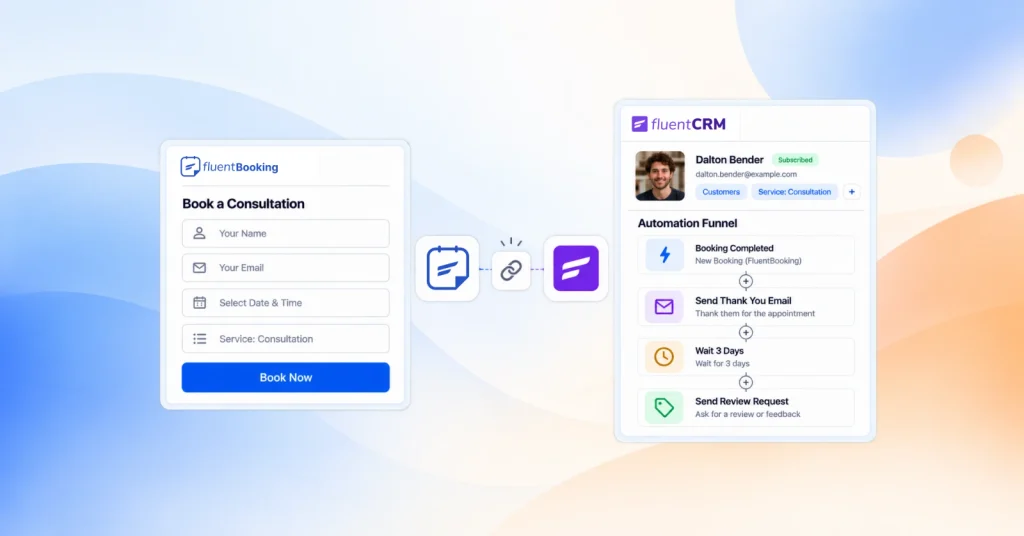
Smart scheduling tools help students book classes instantly, choose preferred time slots, receive automatic reminders, and reschedule easily. This reduces no-shows, improves class attendance, and creates a better first experience for new students.
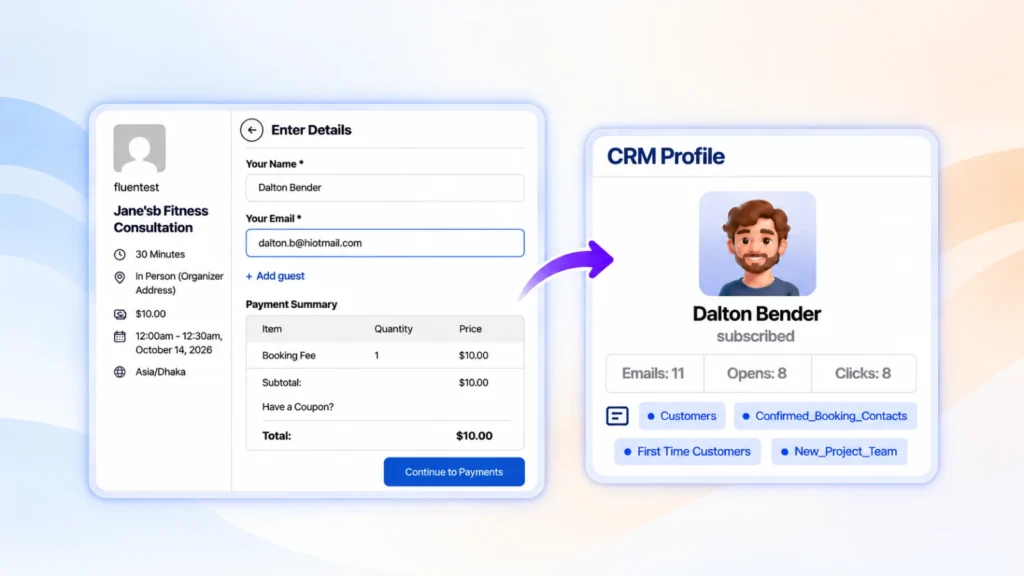
It also helps you collect useful information like email addresses, class preferences, and instructor choices during the booking process. This makes follow-up marketing more effective because you can send targeted emails based on real student behavior.
There are many appointment scheduling tools available for yoga studios. If your studio runs on WordPress, using a native booking solution like FluentBooking can make scheduling easier without needing multiple separate systems.
Good scheduling improves convenience, retention, and overall studio growth. The easier it is to book, the easier it is to convert visitors into long-term members.
14. Build an Affiliate or Referral Program
Word-of-mouth is one of the most powerful marketing channels for yoga studios because people trust recommendations from friends more than advertisements.
Creating a simple referral program helps turn loyal members into consistent growth drivers while keeping your acquisition cost low. Here are a few ways to make it work:
- Student referral rewards: Offer discounts or free classes for each friend they refer who signs up
- Affiliate partnerships: Partner with yoga product companies and earn commissions on sales
- Ambassador program: Create a formal program where dedicated students earn benefits for promoting your studio
- Gamified tracking: Use management software to track referrals and celebrate top ambassadors.
15. Invest in Online Class Options
The way people practice yoga has changed. Many students now want flexibility, convenience, and the option to join classes from anywhere.
Offering online classes helps your studio reach beyond its physical location and creates an additional revenue stream without needing more studio space.
There are several ways to do this:
- Live virtual classes: Teach classes through Zoom or other platforms so students can join from home in real time
- Pre-recorded classes: Build an on-demand library of yoga sessions students can access anytime
- Hybrid model: Offer both in-person and online options so students can choose what works best for them
- Specialized online programs: Create short courses like beginner yoga, stress relief routines, or meditation series
- Global reach: Attract students from outside your city or even internationally
Online classes also help during slow seasons, bad weather, travel periods, or schedule conflicts when students cannot attend in person.
This flexibility improves retention, increases accessibility, and helps your studio grow beyond local limitations.
16. Partner with Local Businesses
Strong local partnerships can bring some of the warmest and most reliable leads for your yoga studio. When trusted businesses recommend your studio, people are more likely to join because the trust already exists.
Look for businesses that serve a similar audience and create simple win-win collaborations.
Partnership ideas include:
- Wellness businesses: Work with nutritionists, massage therapists, physiotherapists, or acupuncturists for cross-promotions and referral exchanges
- Fitness centers: Offer yoga sessions for gym members who want flexibility, recovery, or stress relief
- Mental health professionals: Partner with therapists or counselors who can refer clients looking for mindfulness and relaxation support
- Local cafés and restaurants: Create healthy post-class discounts or special offers with nearby wellness-focused businesses
- Corporate offices: Offer lunchtime yoga, after-work sessions, or employee wellness classes for nearby companies
These partnerships help you reach new audiences, improve local credibility, and create long-term referral opportunities that grow your studio naturally.
17. Leverage Strategic Influencer Partnerships
Word-of-mouth from trusted voices is incredibly powerful. Rather than chasing celebrities, focus on building relationships with local wellness influencers who align with your studio’s values.
Nano and Micro-Influencer Strategy:
Forget celebrity endorsements, local micro-influencers often deliver better ROI than national accounts:
- Nano-influencers: 1,000 to 9,999 engaged local followers
- Micro-influencers: 10,000 to 99,999 followers
These creators have highly engaged, loyal audiences who trust their recommendations. They’re also more affordable and authentic than larger influencers.
Influencer partnership ideas:
- Offer complimentary monthly memberships in exchange for regular Instagram Reels and TikToks from their classes
- Feature them in “instructor spotlight” content on your social media
- Invite them to co-teach special workshops
- Create exclusive content together (e.g., “Yoga Challenge with [Influencer Name]”)
- Provide free passes for their followers with trackable discount codes
- Tag them in posts and stories featuring their classes
The goal is not just to reach, but to trust. Strong influencer partnerships help your studio gain visibility, credibility, and new students through authentic community recommendations.
18. Develop Corporate Wellness Programs
Nearly half of consumers consider community an essential part of their wellness experience. Corporate partnerships tap into established networks and bring steady, predictable revenue. In fact, corporate wellness is often less price-sensitive than individual memberships, making it a highly profitable revenue stream.
Corporate Yoga Program Ideas:
- Lunchtime or after-work classes: Offer yoga sessions at local corporate offices during lunch hours or after work
- Team-building yoga events: Host group sessions as corporate team-building activities
- Corporate wellness packages: Create discounted memberships for companies to offer employees
- On-site instruction: Send instructors to corporate offices for dedicated classes
- Wellness seminars: Offer stress management and mindfulness workshops to corporate groups
- Wellness challenges: Create month-long challenges employees can participate in together
Corporate partnerships often bring stable recurring income, stronger local visibility, and high-value long-term clients with less marketing effort than individual student acquisition.
19. Develop Strategic Pricing and Packages
Your pricing strategy is more than just numbers; it is a powerful marketing tool. The right pricing structure helps reduce hesitation for new students, increases long-term retention, and encourages higher-value memberships.
- Class packages: Offer packages (5, 10, or 20 classes) at better per-class rates
- Unlimited memberships: For committed students, usually 20-30% higher per-class value
- Drop-in rates: For beginners who want flexibility
- Corporate rates: Special pricing for companies
- Student or senior discounts: Make yoga accessible
- Seasonal promotions: Off-peak pricing to fill underutilized time slots
- Intro offers: Heavy discounts for new students to reduce barriers to entry
Smart pricing improves conversions because it helps students choose the option that feels right for them instead of delaying the decision.
20. Monitor Analytics and Track Marketing Performance
A yoga marketing plan without measurement is guesswork. Tracking performance is essential for marketing for yoga studios of any size.
Key Performance Indicators (KPIs) to Track
- Member acquisition cost: Total marketing spend divided by new members acquired
- Intro-offer conversion rate: Percentage of trial class takers who become paid members
- Retention rate: Percentage of members who remain active month-to-month
- Revenue per member: Average revenue generated per student annually
- Class fill rate: Percentage of available spots filled per class
- Email engagement rate: Open rates, click rates, and conversion from email
- Social media engagement: Likes, comments, shares, and follower growth rate
- Website traffic: Monthly visitors and conversion to class bookings
Your Best Marketing Strategy Is Consistency
Growing a successful yoga studio is not about trying every marketing trend at once; it is about choosing the right strategies and applying them consistently.
From improving your Google Business Profile and local SEO to building trust through social media, reviews, appointment scheduling, and referral programs, every small step helps create long-term growth.
The most successful studios are not always the ones with the biggest budgets. They are the ones that understand their audience, create a strong community, and make it easy for students to discover, trust, and return.
Start with a few ideas that fit your studio best, track what works, and improve as you grow. Because in yoga marketing, consistency builds stronger results than complexity ever will.
Frequently Asked Questions
Ratul Hasan Ripon
I enjoy making complex ideas simple and engaging through my writing and designs. With a strong knowledge on content writing and SEO, I create technical content that’s both easy to understand and interesting.
Table of Content
Subscribe To Get
WordPress Guides, Tips, and Tutorials



Add your first comment to this post