

How to Reduce Patient No-Shows: 10 Proven Strategies Every Healthcare Clinic Should Use


Patient no-shows are one of the biggest challenges healthcare clinics face. Missed appointments can lead to lost revenue, wasted staff time, scheduling gaps, and delays in patient care. Over time, even a small number of no-shows can affect your clinic’s productivity and overall patient experience.
Fortunately, many no-shows are preventable. By improving communication, simplifying scheduling, and making it easier for patients to confirm or reschedule appointments, clinics can significantly improve attendance rates.
In this guide, you’ll learn why patients miss appointments and discover 10 proven strategies to reduce patient no-shows and keep your schedule running smoothly.
Why Patients Miss Appointments
Patient no-shows can happen for many reasons, and understanding them is the first step toward reducing missed appointments. Some of the most common causes include:
- Forgetfulness: Patients may simply forget their appointments, especially if they are scheduled weeks in advance and no reminders are sent.
- Long Wait Times: Longer gaps between booking and the appointment increase the likelihood of scheduling conflicts or losing urgency.
- Transportation Issues: Limited transportation options, traffic, or long travel distances can prevent patients from arriving on time.
- Work or Family Commitments: Busy work schedules, childcare responsibilities, or unexpected personal emergencies can lead to missed appointments.
- Financial Concerns: Worries about treatment costs, insurance coverage, or unexpected medical expenses may cause patients to postpone or skip their visits.
- Fear or Anxiety: Some patients avoid appointments due to anxiety about medical procedures, diagnoses, or treatment.
- Poor Communication: Unclear appointment details, a lack of reminders, or difficult rescheduling processes can increase the chances of a no-show.
How Patient No-Shows Affect Healthcare Clinics
Patient no-shows have consequences that go beyond an empty appointment slot. They can disrupt daily operations, reduce efficiency, and affect both your clinic and your patients in several ways.
- Lost Revenue: Every missed appointment represents lost income that cannot always be recovered, especially if the time slot remains unfilled.
- Wasted Provider Time: Doctors and healthcare professionals may have unused time that could have been spent treating other patients.
- Lower Staff Productivity: Front desk staff and administrators spend additional time managing missed appointments, contacting patients, and rescheduling visits.
- Longer Waiting Lists: Empty appointment slots mean other patients who need timely care may have to wait longer for available appointments.
- Delayed Patient Treatment: Missing scheduled visits can postpone diagnoses, treatments, or follow-up care, potentially affecting patient health outcomes.
- Reduced Patient Satisfaction: Frequent scheduling disruptions and longer wait times can create a poor patient experience and reduce trust in your clinic.
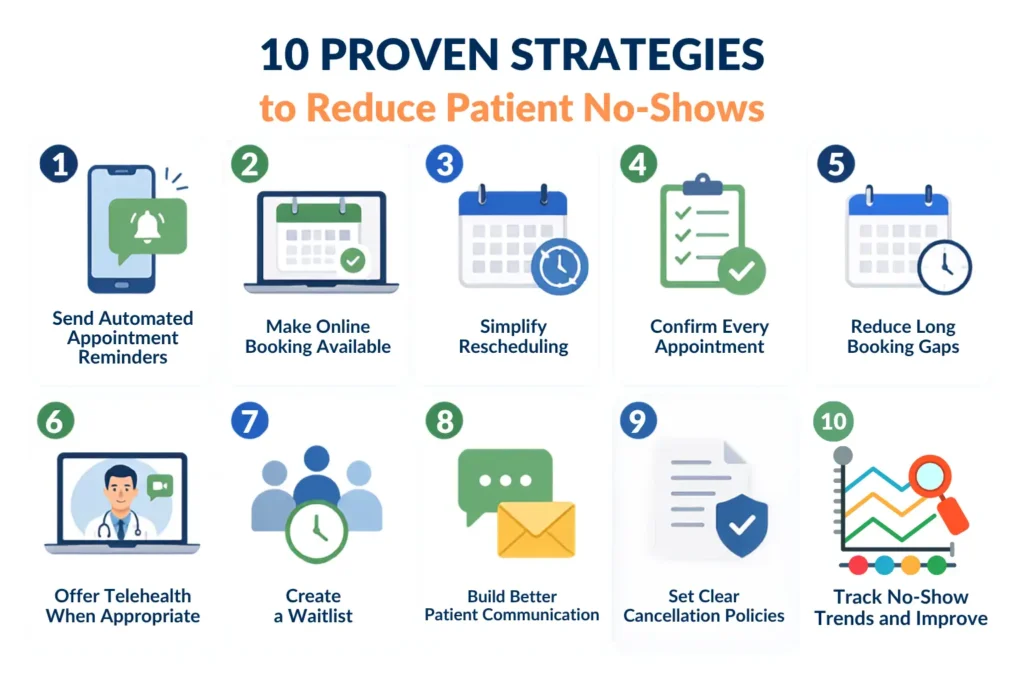
10 Proven Strategies to Reduce Patient No-Shows
From smarter scheduling to better patient communication, these proven strategies can help healthcare clinics reduce missed appointments, improve attendance, and keep their schedules running efficiently.
1. Keep Patients on Schedule with Automated Appointment Reminders
Automated appointment reminders are one of the easiest and most effective ways to reduce patient no-shows. Many patients simply forget their appointments, especially when they’re scheduled weeks in advance. Sending reminders through SMS, email, or voice calls keeps the appointment top of mind and reduces the need for manual follow-ups.
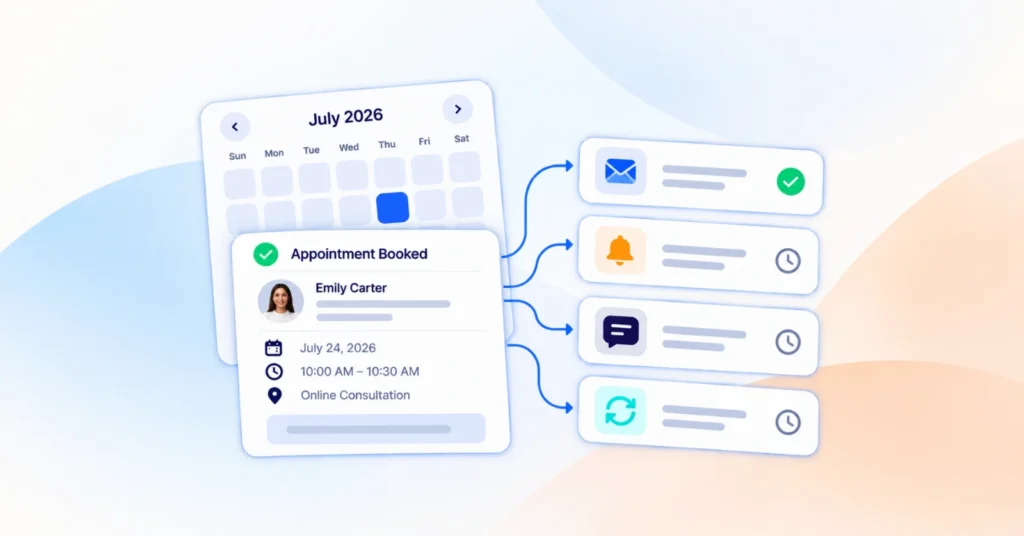
For the best results, send reminders 3–7 days before, 24 hours before, and again a few hours before the appointment. Each reminder should include the appointment date, time, clinic location, and a confirmation or rescheduling link so patients can respond with a single click.
Practical tip: Personalize reminders by including the patient’s name and provider’s name. A friendly message like “Hi Sarah, this is a reminder of your appointment with Dr. Smith tomorrow at 10:00 AM. Confirm or reschedule here.” feels more personal and encourages patients to take action.
2. Let Patients Book Appointments Anytime with Online Scheduling
Offering online booking makes scheduling more convenient for both patients and clinic staff. Instead of calling during office hours, patients can book appointments anytime using their computer or mobile device. This flexibility allows them to choose a time that fits their schedule, increasing their commitment to attend.
Online self-scheduling also reduces phone calls, minimizes scheduling errors, and frees up front desk staff to focus on patient care. When patients have more control over the booking process, they’re less likely to miss their appointments.
Display your online booking page prominently on your website, Google Business Profile, and social media pages. The easier it is to book an appointment, the more likely patients are to schedule and keep it.
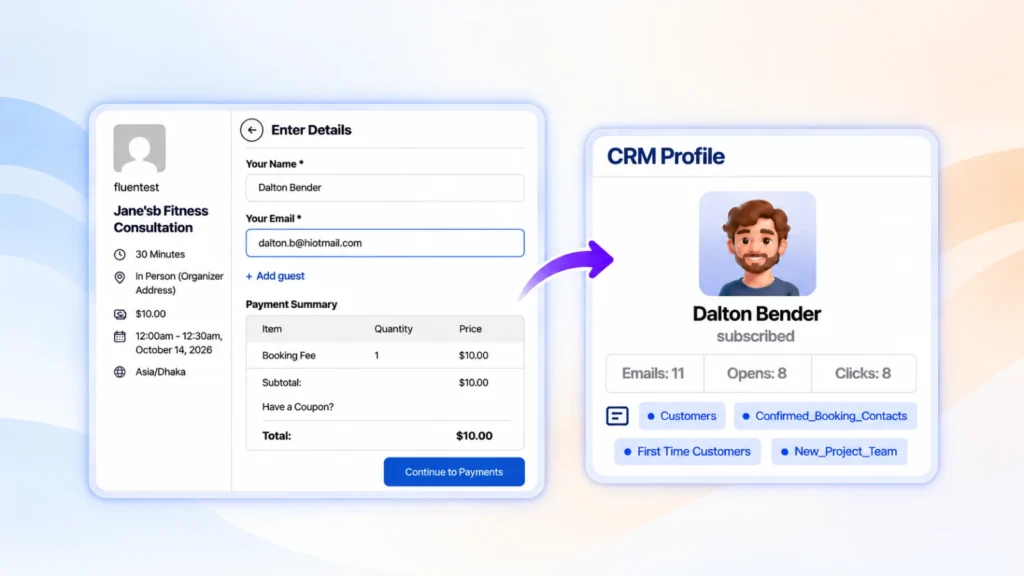
Pro Tip: If your clinic runs on WordPress, a scheduling solution like FluentBooking makes it easy to create a professional online booking system. Patients can book appointments 24/7, receive automated confirmations, and manage their bookings without contacting your staff, helping reduce missed appointments while improving the overall booking experience.
3. Make Rescheduling Easy to Prevent Missed Appointments
Unexpected schedule changes are inevitable, but they don’t have to result in a no-show. When patients can quickly reschedule their appointments instead of canceling or skipping them, clinics retain more bookings and reduce empty time slots.
Avoid making patients call the clinic or wait on hold to change an appointment. Instead, provide a one-click rescheduling option in your appointment reminders and confirmation emails. This gives patients the flexibility to choose a new time that better fits their schedule, improving both convenience and attendance.
Practical tip: Allow patients to reschedule online up to a certain time before their appointment, such as 24 hours in advance. This gives your clinic enough time to offer the canceled slot to another patient and keep your schedule full.
4. Confirm Every Appointment Before the Visit
Appointment reminders are helpful, but asking patients to confirm their appointments adds another layer of accountability. A confirmation request lets your clinic know who’s planning to attend and helps identify cancellations before they become no-shows.
Use SMS or email reminders with simple Confirm, Reschedule, or Cancel options. If a patient doesn’t respond, your staff can follow up before the appointment. This proactive approach helps fill vacant slots and keeps your schedule running efficiently.
Automate your confirmation workflow by sending a confirmation request 24 to 48 hours before the appointment. Patients who don’t confirm can receive a follow-up reminder or a quick phone call from your staff, reducing the risk of last-minute no-shows.
5. Shorten Booking Gaps to Reduce Patient Forgetfulness
The longer the gap between booking and the appointment date, the greater the chance that patients will forget, encounter scheduling conflicts, or decide they no longer need the visit. While advance scheduling isn’t always avoidable, keeping wait times as short as possible can improve attendance.
Review your scheduling process to identify opportunities for earlier appointments, especially for routine visits and follow-ups. Shorter booking windows help patients stay engaged and make appointments feel more immediate.
If appointments must be scheduled several weeks in advance, combine shorter booking gaps with a reminder sequence. Sending reminders a week before, a day before, and on the day of the appointment helps keep patients informed and reduces the likelihood of a no-show.
6. Offer Telehealth to Keep Patients Connected
Not every appointment requires an in-person visit. Offering telehealth gives patients a convenient alternative when travel, illness, or a busy schedule makes it difficult to visit the clinic. It’s especially useful for follow-up appointments, medication reviews, and chronic disease management, where a physical examination may not be necessary.
Providing virtual care helps reduce missed appointments while improving access to healthcare for patients in remote areas or those with mobility challenges.
Practical tip: Clearly identify which appointment types are eligible for telehealth and include the virtual visit option during online booking. Send the meeting link and joining instructions in advance so patients can connect without confusion on the day of their appointment.
7. Strengthen Patient Communication at Every Step
Last-minute cancellations don’t have to leave gaps in your schedule. A waitlist allows you to quickly offer newly available appointments to patients who want an earlier time, helping you maximize provider availability and reduce lost revenue.
Modern scheduling systems can automatically notify patients on the waitlist when a slot opens. Interested patients can claim the appointment within minutes, keeping your schedule full without requiring manual coordination.
Let patients join the waitlist when they book their appointment. If a cancellation occurs, send the available slot to multiple eligible patients and assign it to the first person who confirms. This speeds up the process and minimizes empty appointment times.
8. Strengthen Patient Communication at Every Step
Appointment reminders are important, but effective communication starts long before the visit. Providing patients with clear information helps them feel prepared and reduces confusion that can lead to missed appointments. Include details such as preparation instructions, parking information, required documents, and what to expect during the visit.
Communication shouldn’t end after the appointment either. Follow-up messages can reinforce treatment plans, encourage future visits, and strengthen patient relationships.
To build trust and improve attendance, create a communication checklist for every appointment: send immediate booking confirmations, prep instructions a few days prior, timely reminders closer to the visit, and a follow-up message afterward. Clinics can easily automate this entire workflow using a text messaging for healthcare service that allows staff to send texts directly from their existing front-desk email.
Bonus: If you use FluentCRM, you can automate patient communication by sending personalized emails before and after appointments. This makes it easy to share reminders, pre-visit instructions, follow-up care information, and appointment updates, helping patients stay informed without adding extra work for your staff.
9. Create a Clear Cancellation Policy That Patients Understand
A clear cancellation policy encourages patients to notify your clinic when they can’t attend an appointment. Instead of using strict rules that may discourage bookings, create a policy that is fair, easy to understand, and focused on improving communication. Explain how much advance notice is required, whether a cancellation fee applies, and any exceptions for emergencies.
Including a reasonable grace period gives patients flexibility while helping your clinic manage schedule changes more effectively. The goal is to encourage patients to cancel early rather than become a no-show.
Practical tip: Share your cancellation policy during booking, include it in confirmation emails, and mention it in appointment reminders. When patients know the expectations in advance, they’re more likely to provide notice if their plans change.
10. Track No-Show Trends and Continuously Improve Attendance
Reducing patient no-shows isn’t a one-time task. It requires regular monitoring to identify patterns and improve your scheduling process. By tracking key metrics, you can understand why appointments are missed and make data-driven decisions to improve attendance.
Monitor important indicators such as your no-show rate, cancellation rate, reminder response rate, peak no-show times, and high-risk patient groups. These insights can help you adjust reminder schedules, optimize appointment availability, and provide additional support to patients who frequently miss appointments.
Practical tip: Review your appointment data every month and look for recurring trends. Even small improvements, such as changing reminder timing or offering more flexible scheduling, can significantly reduce no-shows over time.
Common Mistakes That Increase Patient No-Shows
Even with the right tools in place, certain mistakes can lead to a higher no-show rate. Here are seven common mistakes healthcare clinics should avoid:
- Relying on a single reminder: One reminder is often not enough, especially for appointments booked well in advance.
- Making rescheduling difficult: If patients have to call or wait on hold, they’re more likely to miss the appointment instead of changing it.
- Scheduling appointments too far in advance: Long booking gaps increase the chances of patients forgetting or encountering scheduling conflicts.
- Providing unclear appointment details: Missing information about the clinic location, preparation instructions, or required documents can create confusion.
- Using only one communication channel: Combining SMS, email, and voice reminders increases the chances that patients will see your messages.
- Having unclear cancellation policies: Patients are less likely to provide advance notice if they don’t understand the cancellation process or required notice period.
- Ignoring appointment data: Failing to track no-show trends, cancellation rates, and reminder performance makes it difficult to identify problems and improve attendance.
Avoiding these common mistakes can help your clinic improve patient communication, increase appointment attendance, and make better use of every available appointment slot.
Every Appointment Counts: Turn Fewer No-Shows Into Better Care
Reducing patient no-shows isn’t about relying on a single solution. It’s about creating a smoother appointment experience from start to finish. By combining automated reminders, online scheduling, flexible rescheduling, clear communication, and regular performance tracking, healthcare clinics can improve attendance and make better use of every appointment slot.
Start by implementing one or two of these strategies, then measure the results and continue refining your process. Small improvements can lead to fewer missed appointments, higher patient satisfaction, and a more efficient clinic that delivers better care to every patient.
Ratul Hasan Ripon
I enjoy making complex ideas simple and engaging through my writing and designs. With a strong knowledge on content writing and SEO, I create technical content that’s both easy to understand and interesting.
Table of Content
Subscribe To Get
WordPress Guides, Tips, and Tutorials


Add your first comment to this post