

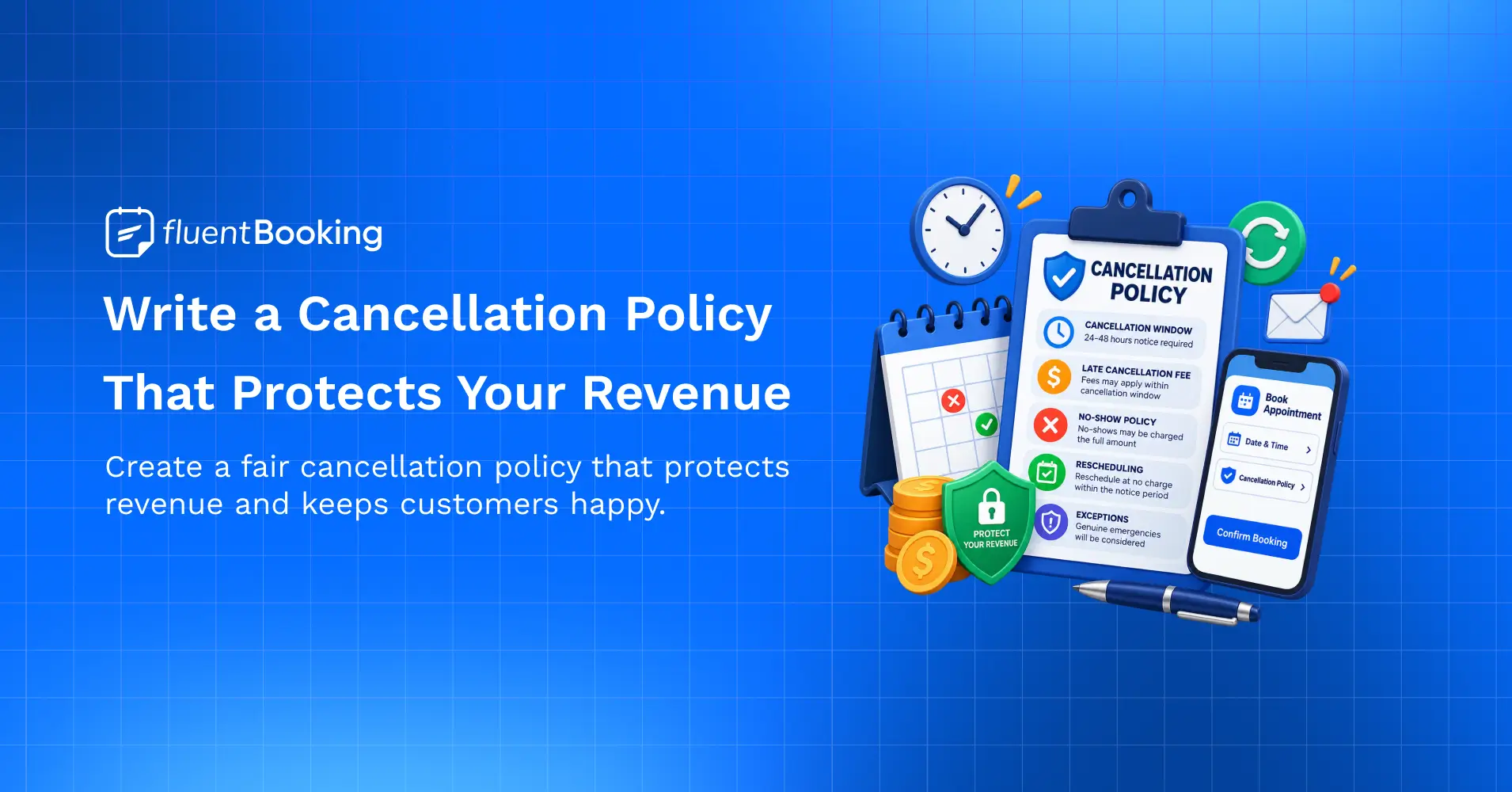
How to Write a Cancellation Policy That Protects Your Booking Revenue


Cancellations are an unavoidable part of running a booking-based business. Whether you manage a salon, consulting service, fitness studio, clinic, or event business, a last-minute cancellation can leave an empty time slot that is difficult to fill. Too many cancellations and no-shows can quickly turn into lost revenue.
A clear cancellation policy helps you manage this problem without making customers feel like they are being punished. It sets expectations before a customer books, explains what happens when they cancel, and gives your business a fair way to handle late cancellations and no-shows.
The key is to create a policy that protects your revenue while remaining simple, reasonable, and customer-friendly. Here’s how to write one that works.
Understand Why a Cancellation Policy Matters
A cancellation policy is more than a set of rules for customers. It can help you protect your schedule, reduce revenue loss, and create a more predictable booking process.
Here are some of the main reasons to have one:
- Protect Revenue: A last-minute cancellation can leave a booking slot empty when it is too late to offer it to someone else.
- Reduce No-Shows: Clear consequences can encourage customers to take their appointments more seriously.
- Set Clear Expectations: Customers know exactly when they can cancel, whether they will receive a refund, and when a fee may apply.
- Save Staff Time: A clear policy gives your team a consistent way to handle cancellations instead of deciding what to do each time.
- Build Trust: When your rules are explained clearly before booking, customers are less likely to feel surprised by a cancellation fee.
A good policy should protect your business without creating unnecessary friction for your customers.
How to Write an Effective Cancellation Policy (Step-by-step)
Writing a cancellation policy is not just about deciding when to charge customers. You also need to make sure the policy is fair, easy to understand, and practical for your business to enforce. A well-structured policy can help reduce last-minute cancellations and no-shows while protecting your booking revenue and maintaining a positive customer experience.
Here are the key steps to create a cancellation policy that works for both your business and your customers:
Set the Right Cancellation Window
The cancellation window is the amount of notice customers need to provide if they want to cancel without a penalty.
There is no single cancellation window that works for every business. The right timeframe depends on your service, appointment length, demand, and how easily you can fill an empty slot.
Consider these common options:
- 24 Hours: A practical option for many salons, consultants, personal trainers, and other service-based businesses.
- 48 Hours: Useful for longer appointments or services that are harder to book again at short notice.
- 72 Hours or More: Suitable for specialized services, events, or bookings that require significant preparation.
- Same-Day Cancellation: This can work for businesses where empty slots are relatively easy to fill or where appointments require little preparation.
For example, a 30-minute consultation may only need 24 hours’ notice, while a two-hour event service may require several days.
Whatever timeframe you choose, make it specific. Instead of saying “Please cancel in advance,” state exactly how much notice customers need to provide.
Decide on a Fair Cancellation Fee
If a customer cancels too close to their appointment, you may want to charge a fee to recover some of the revenue you could lose.
There are several ways to structure your cancellation fee:
- Flat Fee: Charge a fixed amount for late cancellations or no-shows. This is simple and easy for customers to understand.
- Percentage of the Booking: Charge a percentage of the appointment or service price. This can work well when your services have different prices.
- Deposit Forfeiture: Keep the deposit when a customer cancels after the allowed cancellation period.
- Full Payment: For high-demand services, events, or bookings that require significant preparation, you may choose to charge the full amount for a late cancellation or no-show.
The right option depends on your business model. A $25 flat fee may make sense for a small appointment, while a percentage-based charge may be more appropriate for an expensive service.
The important thing is to explain the fee before customers complete their booking. Unexpected charges are much more likely to create frustration.
Create a Clear No-Show Policy
A cancellation and a no-show are not necessarily the same thing.
A cancellation means the customer actively tells you that they cannot attend. A no-show means they fail to attend without providing notice.
Your policy should explain what happens in both situations.
For example, you might allow customers to cancel for free up to 24 hours before their appointment, charge a partial fee for late cancellations, and charge a higher fee for no-shows.
You should also decide how to handle repeat no-shows. If someone repeatedly books appointments and does not attend, you could require a deposit or full payment before allowing them to make another booking.
Having these rules in writing makes it easier for your team to enforce them consistently.
Give Customers an Easy Rescheduling Option
Not every cancellation means a customer no longer wants your service. Sometimes they simply cannot make the original appointment time.
Offering an easy rescheduling option can help you keep the booking instead of losing the customer completely.
For example, your policy could allow customers to reschedule once without a fee if they provide enough notice. You can also specify that rescheduling within the cancellation window may be treated as a late cancellation.
A flexible approach might look like this:
Customers can reschedule their appointment at no charge when they provide at least 24 hours’ notice. Rescheduling requests made less than 24 hours before the appointment may be subject to a cancellation fee.
This gives customers an alternative while still protecting your schedule.
Set Clear Deposit and Refund Rules
Deposits can reduce the financial impact of cancellations, particularly for expensive or high-demand services.
If you collect a deposit, your cancellation policy should clearly explain what happens to it.
For example:
- Deposits are fully refundable when customers cancel before the cancellation deadline.
- Deposits can be transferred to a new appointment when customers reschedule within the allowed timeframe.
- Deposits may be partially or fully forfeited after a late cancellation.
- Deposits may be forfeited when a customer does not show up.
Make sure your refund terms are easy to understand before customers pay. This can prevent disputes later and gives customers a clear idea of what they are agreeing to.
Include Exceptions for Genuine Emergencies
A cancellation policy should protect your business, but it does not have to be completely inflexible.
Unexpected situations happen. A customer may have a medical emergency, a family emergency, severe weather may affect travel, or another situation may prevent them from attending.
Consider including a short exception clause for genuine emergencies.
You could write:
We understand that unexpected emergencies can happen. In these situations, cancellation fees may be waived at our discretion.
The exact exceptions will depend on your business. The important thing is to avoid making the policy so broad that customers can use “emergency” as a reason for every late cancellation.
You should also apply exceptions consistently. If your team makes exceptions, give them clear guidelines about when they are appropriate.
Keep Your Cancellation Policy Simple and Clear
Customers should not need to read a long legal document to understand your cancellation rules.
Use simple language and focus on the information customers actually need to know:
- How much notice is required?
- When does a fee apply?
- How much is the fee?
- What happens if they do not show up?
- Can they reschedule?
- Are deposits refundable?
- Are there any exceptions?
Avoid complicated sentences and unnecessary legal terminology.
For example, instead of:
“Any cancellation occurring subsequent to the aforementioned period shall constitute a breach of the booking terms and conditions…”
Say:
“Cancellations made less than 24 hours before the appointment may be charged a $25 fee.”
The second version is much easier to understand.
Communicate the Policy Before the Customer Books
A cancellation policy only works when customers know about it.
Don’t wait until a customer cancels to tell them about the rules. Make the policy visible throughout the booking process.
Consider displaying it in:
- Your booking page: Let customers see the policy before confirming their appointment.
- Your booking form: Include a short version of the policy before the final confirmation.
- Confirmation emails: Remind customers of the cancellation deadline after they book.
- Appointment reminders: Include a brief reminder about cancellation or rescheduling.
- Your website: Add the full policy to your FAQ, terms, or booking information page.
The most important point is to communicate the policy before the customer commits to the booking.
Review and Improve Your Policy
Your cancellation policy should not be something you write once and never look at again.
Track your cancellation and no-show patterns to see whether the policy is actually helping your business.
For example, if you notice a high number of same-day cancellations, you may need to reconsider your cancellation window. If customers frequently complain about a particular fee, you may need to make the policy clearer or adjust the amount.
You can review:
- Cancellation rates
- No-show rates
- Late cancellation frequency
- Revenue lost from empty booking slots
- Rescheduling rates
- Customer feedback
Use this information to make gradual improvements. A policy that works well today may need to change as your business grows.
Cancellation Policy Examples You Can Use
Here are a few simple examples you can adapt to your business.
24-Hour Cancellation Policy
We require at least 24 hours’ notice to cancel or reschedule an appointment. Cancellations made less than 24 hours before the scheduled appointment may be subject to a cancellation fee. No-shows may be charged the full appointment fee.
48-Hour Cancellation Policy
Please provide at least 48 hours’ notice if you need to cancel or reschedule your appointment. Cancellations made less than 48 hours before the appointment may result in a cancellation fee or loss of your deposit.
Flexible Cancellation Policy
We understand that plans can change. You can cancel or reschedule your appointment free of charge by providing at least 24 hours’ notice. Late cancellations may be subject to a fee. Genuine emergencies will be considered on a case-by-case basis.
Deposit-Based Cancellation Policy
A deposit is required to confirm your booking. The deposit is fully refundable when you cancel at least 48 hours before your appointment. Cancellations made within 48 hours of the appointment and no-shows may result in the deposit being forfeited.
Remember to customize these examples based on your services, pricing, customers, and local requirements.
Automate Your Cancellation Policy
Managing cancellations manually can become difficult when your business handles dozens or hundreds of bookings.
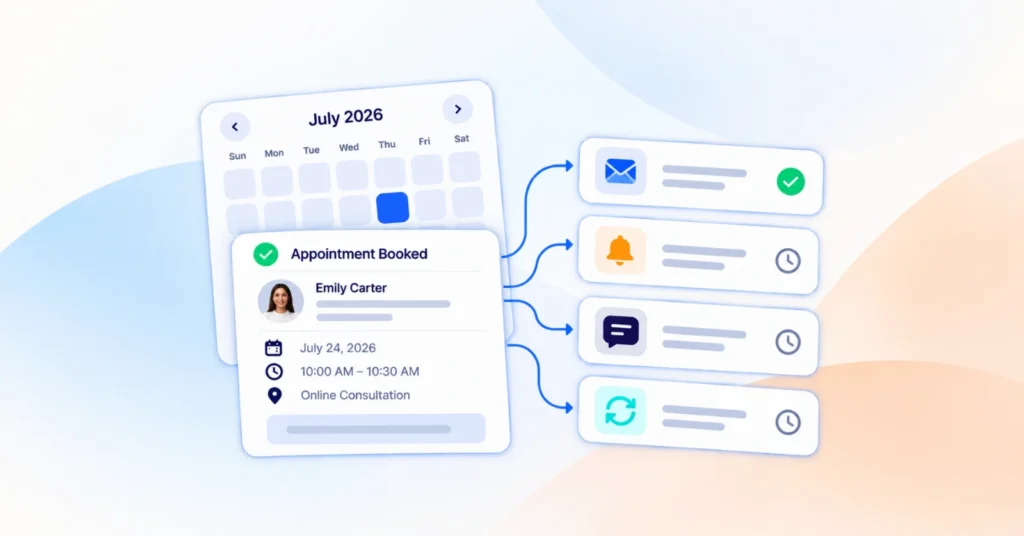
A booking system can automate many parts of the process, including:
- Sending booking confirmations
- Sending appointment reminders
- Allowing customers to cancel online
- Allowing customers to reschedule
- Collecting deposits or payments
- Sending cancellation notifications
- Keeping your booking calendar updated
Automation also makes enforcement more consistent. Instead of asking staff to manually check every cancellation, your booking system can handle much of the process automatically.
This creates a smoother experience for both your team and your customers while reducing the amount of time spent managing cancellations.
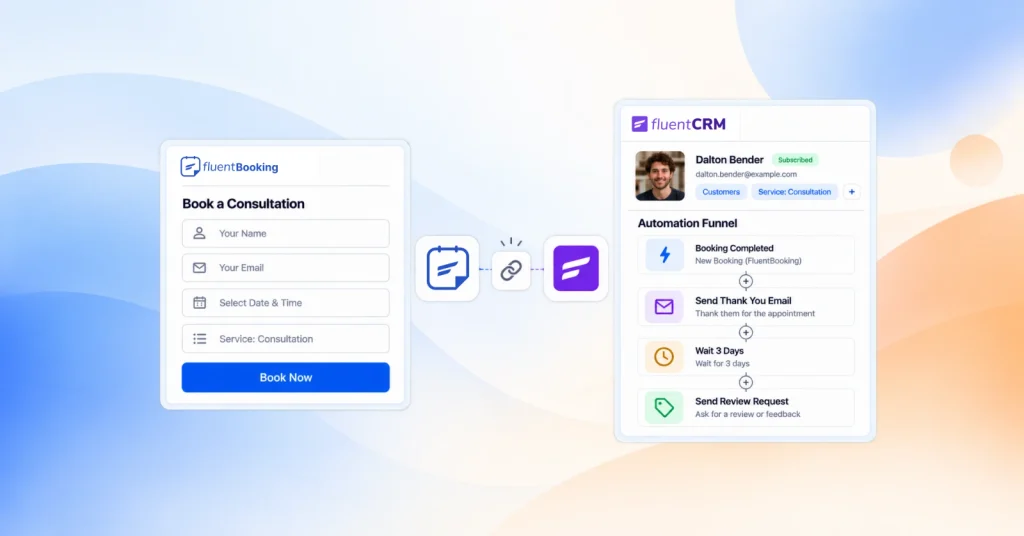
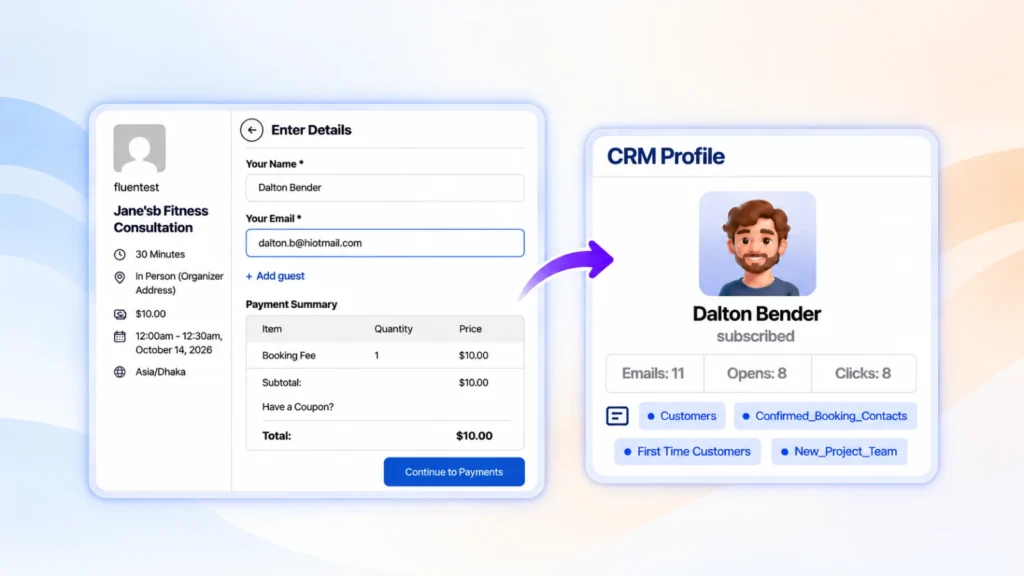
If your website runs on WordPress, FluentBooking can help you manage these tasks from one place. You can send automatic confirmation, reminder, cancellation, and rescheduling emails, while also giving customers a convenient way to manage their bookings.
FluentBooking also lets you control when attendees can cancel or reschedule an appointment. For example, you can prevent customers from canceling or rescheduling within a specific period before the meeting starts, helping you enforce the cancellation window you set in your policy.
Try FluentBooking to automate your booking, reminder, cancellation, and rescheduling workflows.

Common Cancellation Policy Mistakes to Avoid
Even a cancellation policy can create problems if it is poorly designed or communicated.
Avoid these common mistakes:
- Making the policy too complicated: Customers should understand the rules quickly.
- Hiding the policy: Don’t place important cancellation terms where customers are unlikely to see them.
- Charging unreasonable fees: Your fee should reflect the potential loss without unnecessarily frustrating customers.
- Not offering rescheduling: Giving customers another option can help you retain bookings.
- Applying the policy inconsistently: Different rules for different customers can create confusion and resentment.
- Ignoring no-shows: No-shows can be just as damaging as late cancellations, so address them directly.
- Never reviewing the policy: Your business can change, and your cancellation rules should change with it.
Conclusion
A well-written cancellation policy can do more than reduce last-minute cancellations. It can help protect your booking revenue, manage your schedule, reduce no-shows, and create clearer expectations for your customers.
The key is to find the right balance. Set a reasonable cancellation window, choose a fair fee, explain your no-show and refund rules, offer rescheduling when possible, and make the policy easy to find before customers book.
Once your policy is in place, use your booking system to automate reminders, cancellations, payments, and rescheduling wherever possible. This makes the policy easier to enforce and gives both your team and your customers a smoother booking experience.
Ratul Hasan Ripon
I enjoy making complex ideas simple and engaging through my writing and designs. With a strong knowledge on content writing and SEO, I create technical content that’s both easy to understand and interesting.
Table of Content
Subscribe To Get
WordPress Guides, Tips, and Tutorials


Add your first comment to this post