

How to Write a Profitable Salon Business Plan in 2026


Opening a salon is easier than building a profitable one.
Every year, thousands of beauty entrepreneurs invest in a great location, stylish interiors, and expensive equipment, yet many struggle to generate consistent revenue. The problem usually isn’t a lack of talent: it’s a lack of planning.
A salon business plan is much more than a document for investors or lenders. It’s a practical roadmap that guides every important decision, from selecting services and pricing them correctly to marketing your business and managing daily operations.
The salon industry in 2026 is also more competitive than ever. Customers expect seamless online booking, personalized experiences, flexible payment options, and excellent service. Successful salon owners combine these modern expectations with solid business fundamentals to create sustainable growth.
This blog is designed to guide you to plan smarter.
TL;DR
- A salon business plan gives your business direction, helping you make smarter decisions and grow with confidence.
- Set clear goals and identify who your ideal customers are before investing your time and money.
- Research your local market and competitors to understand what customers want and how your salon can stand out.
- Offer the right services at the right prices to attract customers while maintaining healthy profits.
- Create a marketing plan that helps you get new customers and encourages existing ones to return.
- Plan your finances carefully by estimating startup costs, monthly expenses, expected revenue, and when you’ll start making a profit.
- Build smooth daily operations with the right team, organized workflows, and quality customer service.
- Use online booking, appointment reminders, and digital payments to save time, reduce missed appointments, and improve the customer experience.
- Keep track of important numbers, such as repeat customers, average spending, and booking rates, to measure your salon’s growth.
- Review and update your business plan regularly so it continues to support your goals as your salon grows.
What Is a Salon Business Plan?
A salon business plan is a strategic document that outlines how your salon will operate, attract customers, generate revenue, and achieve long-term business goals. It combines your vision, market research, operational strategy, financial planning, and growth objectives into a single roadmap.
Many entrepreneurs believe they only need a business plan when applying for loans or seeking investors. In reality, a business plan is just as important for self-funded businesses because it helps owners make informed decisions instead of relying on assumptions.
Think of it as the operating system for your salon. Every pricing decision, marketing campaign, hiring choice, and expansion plan should align with the strategy you’ve established in your business plan.
Why Every Salon Needs a Business Plan
Running a salon involves far more than providing beauty services. You’ll need to manage finances, staff, inventory, marketing, scheduling, and customer relationships, all while maintaining profitability.
A business plan helps you:
- Define clear business objectives
- Understand your target customers
- Analyze competitors
- Estimate startup and operating costs
- Develop pricing strategies
- Build an effective marketing plan
- Forecast revenue and expenses
- Measure business performance
Without a plan, many decisions become reactive rather than strategic.
The Biggest Misconception About Business Plans
One common misconception is that writing a business plan guarantees success.
It doesn’t.
A business plan only creates value when it guides daily business decisions. The most successful salon owners regularly revisit and update their plans based on customer feedback, market trends, and business performance.
Your goal shouldn’t be to write a document; it should be to build a profitable business.
The Profit-First Mindset: What Actually Makes a Salon Profitable?
One weakness of many salon business plan guides is that they explain what to write but rarely explain what drives profit.
In reality, profitability doesn’t depend on a beautifully written executive summary. It depends on how effectively your business converts appointments into long-term customer value.
A simplified profitability formula looks like this:
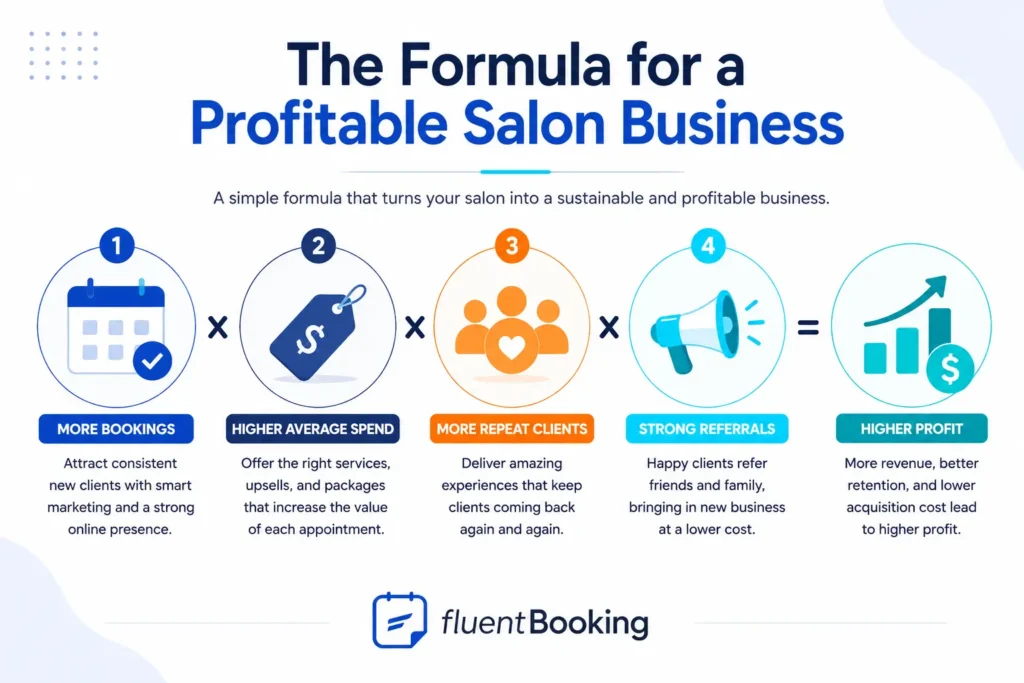
Profit = More Bookings × Higher Average Spend × Strong Customer Retention − Operating Costs − Lost Revenue from No-Shows
This means a profitable salon should focus on five key drivers:
Increase the Number of Bookings
Empty appointment slots generate zero revenue. Your marketing efforts should consistently bring qualified customers into your booking pipeline.
Increase the Average Transaction Value
Instead of relying solely on new customers, encourage existing clients to purchase complementary services or premium packages.
Examples include:
- Haircut + Hair Spa
- Facial + Skincare Consultation
- Hair Color + Treatment Package
Small increases in average spending can significantly improve overall profitability.
Improve Customer Retention
Acquiring new customers is often more expensive than retaining existing ones.
Satisfied customers are more likely to:
- Return regularly
- Refer friends and family
- Purchase additional services
- Join membership programs
Your business plan should therefore include strategies for loyalty and retention, not just acquisition.
Reduce Operational Inefficiencies
Poor scheduling, inventory waste, and inconsistent staffing increase costs without adding value.
Efficient operations help maximize the productivity of your team while improving customer satisfaction.
Minimize No-Shows and Cancellations
Missed appointments directly reduce revenue.
Many successful salons address this challenge by implementing:
- Online appointment booking
- Automated confirmations
- Reminder emails or SMS
- Deposit collection for premium services
These systems help protect valuable appointment slots and create a smoother customer experience.
The key takeaway is simple:
A profitable salon business plan isn’t just about describing your business; it should explain how your business will consistently generate and grow profit.
Key Elements of a Successful Salon Business Plan
Every section of your business plan should answer one question:
How does this help the salon become more profitable and sustainable?
The following components work together to create a practical roadmap for growth.
Executive Summary
Although it appears first, the executive summary is often easiest to write last because it summarizes the rest of your plan.
A strong executive summary should briefly explain:
- Your salon concept
- Target customers
- Core services
- Competitive advantage
- Business objectives
- Financial outlook
Instead of writing a generic overview, focus on communicating why your salon will succeed.
Example:
Glow Studio is a modern beauty salon serving working professionals through premium hair and skincare services, convenient online booking, personalized memberships, and exceptional customer experiences. The business aims to achieve profitability within its first year while building a loyal local client base.
Business Description
Your business description explains exactly what your salon does and what differentiates it from competitors.
Include information such as:
- Business model
- Location
- Service specialization
- Target audience
- Brand positioning
- Long-term vision
Rather than trying to appeal to everyone, define a clear niche. A salon known for a specific expertise is often easier to market than one attempting to offer every possible service.
Mission and Vision Statement
Your mission describes your current purpose.
Example
To deliver high-quality beauty services through exceptional customer care, skilled professionals, and convenient digital experiences. Your vision describes where you want your salon to be in the future.
Example
To become the most trusted and customer-focused salon in our community while setting new standards for convenience and service quality.
Business Goals and Objectives
Every goal should be measurable and time-bound.
Examples include:
Short-term goals
- Launch within six months
- Acquire the first 150 customers
- Achieve a 70% appointment occupancy rate
- Build strong local brand awareness
Long-term goals
- Increase annual revenue by 30%
- Open a second location
- Launch a membership program
- Expand into premium beauty services
Clear objectives help transform your salon business plan from a static document into a practical decision-making framework.
Conduct Market Research for Your Salon
Many entrepreneurs choose a location, invest in equipment, and launch their salon before understanding whether there is sufficient demand for their services. Unfortunately, great skills cannot compensate for poor market research.
A strong salon business plan should be built on facts rather than assumptions. Market research helps you identify who your customers are, what they value, how much they’re willing to pay, and how you can position your salon against competitors.
Think of market research as reducing risk before you invest your money.

Identify Your Target Audience
One of the biggest mistakes new salon owners make is trying to attract everyone.
In reality, the more clearly you define your ideal customer, the easier it becomes to design services, set prices, and create marketing campaigns that convert.
Start by asking:
- Who is my ideal customer?
- What services do they need most?
- How often will they visit?
- What is their typical budget?
- What influences their purchasing decisions?
Example customer segments
| Customer Type | What They Value |
| Students | Affordable pricing and trendy styles |
| Working professionals | Convenience, online booking, premium experience |
| Brides and event clients | High-quality service and customized packages |
| Families | Reliability and value for money |
| Luxury customers | Personalized experiences and premium products |
Instead of targeting all of these groups simultaneously, choose one or two primary segments and tailor your business around their needs.
Analyze Your Competitors
Your competitors are not just businesses you’re competing against, they’re valuable sources of information.
Visit nearby salons, review their websites and social media profiles, and study customer feedback. This helps you identify both opportunities and gaps in the market.
Evaluate competitors based on:
- Services offered
- Pricing structure
- Customer reviews
- Brand positioning
- Booking experience
- Staff expertise
- Promotions and memberships
- Online presence
Competitor analysis framework
| Question | Why It Matters |
| What services are most popular? | Reveals local demand |
| What complaints appear repeatedly? | Shows opportunities to differentiate |
| Are prices premium or budget-friendly? | Helps position your salon |
| Do they offer online booking? | Indicates customer expectations |
| How active are they on social media? | Highlights marketing opportunities |
Your goal is not to copy competitors but to create a better overall customer experience.
Evaluate Local Market Demand and Trends
A profitable salon adapts to changing consumer behavior.
Today’s customers don’t simply choose the nearest salon: they compare reviews, browse social media, check prices, and often expect to book appointments online before making a decision.
Some major trends shaping the salon industry in 2026 include:
- Personalized beauty experiences
- Membership and loyalty programs
- Sustainable and eco-friendly products
- Digital payments
- Online appointment scheduling
- Automated reminders
- Premium customer service
Understanding these trends helps ensure your business plan remains relevant beyond the opening day.
Use a Location Scorecard Before Signing a Lease
Location is one of the most expensive decisions you’ll make, so evaluate it objectively rather than emotionally.
Consider rating each potential location on a scale of 1–5 for the following factors:
| Factor | Importance |
| Visibility from the street | ⭐⭐⭐⭐⭐ |
| Parking availability | ⭐⭐⭐⭐ |
| Accessibility by public transport | ⭐⭐⭐⭐ |
| Nearby residential or office areas | ⭐⭐⭐⭐⭐ |
| Level of competition | ⭐⭐⭐⭐ |
| Rental cost | ⭐⭐⭐⭐ |
| Future development potential | ⭐⭐⭐ |
Comparing locations using the same criteria can prevent costly mistakes and help you choose a site with stronger long-term potential.
Turn Research Into a Competitive Advantage
Market research only becomes valuable when it influences your decisions.
For example:
- If local competitors focus on budget services, you may position yourself as a premium salon.
- If customers frequently complain about long waiting times, you can emphasize efficient scheduling.
- If bridal makeup is in high demand, you can develop specialized packages.
- If nearby offices employ many professionals, you can offer express lunchtime services or extended evening hours.
The best salon business plans don’t try to imitate successful competitors, they identify unmet customer needs and build a strategy around solving them.
Define Your Salon Services and Pricing Strategy
Choosing the right services is important, but choosing profitable services is even more important. Many salon owners assume that offering more services will attract more customers. In reality, expanding too quickly can increase costs, complicate operations, and reduce profit margins.
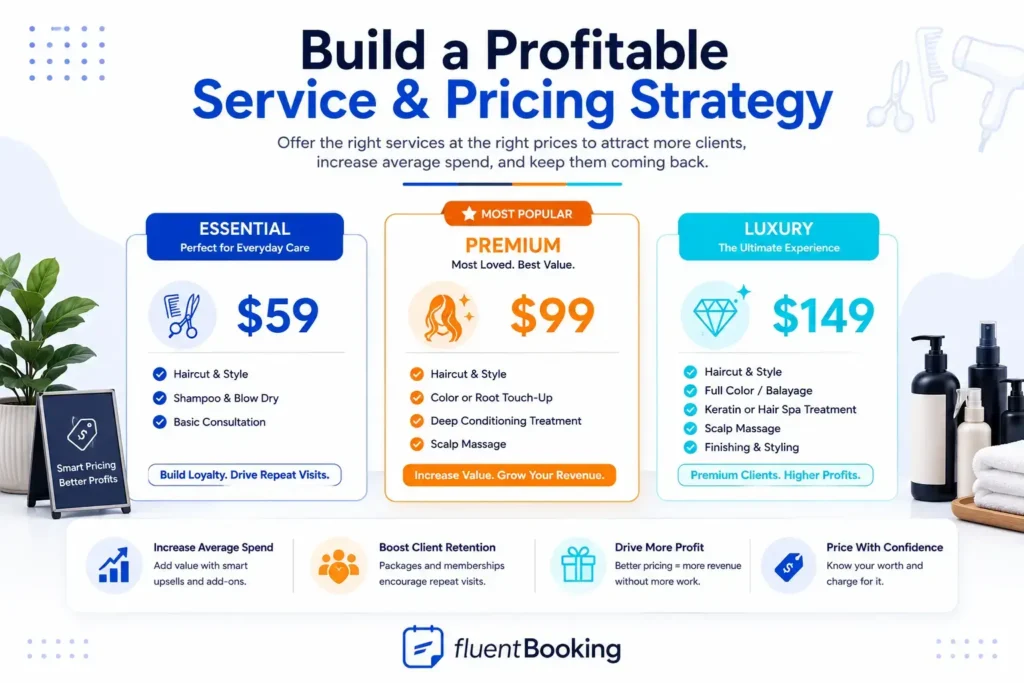
Your salon business plan should focus on services that align with your target audience, your team’s expertise, and your long-term business goals.
Choose Services That Match Your Business Model
Start by identifying your core offerings.
Common services include:
- Haircuts and styling
- Hair coloring
- Hair treatments and hair spa
- Facials and skincare
- Bridal makeup
- Nail care
- Waxing and threading
- Men’s grooming
Rather than launching every service immediately, prioritize those with strong demand and healthy margins. You can expand your portfolio as your business grows and customer preferences become clearer.
Build a Balanced Service Portfolio
A profitable salon typically offers a mix of essential, premium, and high-value services.
| Category | Example |
| Essential | Haircuts, trims, blow-drying |
| Premium | Hair coloring, keratin treatment, advanced facials |
| High-value | Bridal packages, makeover sessions, VIP consultations |
This balance allows you to serve different customer needs while increasing overall revenue.
Price for Profit, Not for Competition
One of the most common mistakes new salon owners make is pricing their services solely based on nearby competitors.
Lower prices may attract attention, but they don’t necessarily create a sustainable business.
When setting prices, consider:
- Product costs
- Employee wages
- Rent and utilities
- Marketing expenses
- Equipment maintenance
- Taxes and overhead
- Desired profit margin
Your pricing should reflect the value you provide, not simply the lowest option available in the market.
A customer often pays for convenience, expertise, ambiance, and trust, not just the service itself.
Increase Average Revenue Per Customer
Growing a salon isn’t only about attracting more customers. It’s also about increasing the value of each appointment.
Some practical strategies include:
- Bundling complementary services
- Offering premium upgrades
- Recommending aftercare products
- Creating seasonal packages
- Introducing memberships or loyalty plans
For example:
Instead of selling a haircut alone, you might offer:
- Haircut + Hair Spa
- Haircut + Beard Grooming
- Hair Color + Treatment
- Facial + Skincare Consultation
These combinations create more value for customers while improving profitability for the business.
Think Beyond One-Time Appointments
The most profitable salons focus on building long-term relationships rather than individual transactions.
Memberships and loyalty programs can encourage repeat visits by offering benefits such as:
- Priority booking
- Member-exclusive discounts
- Complimentary treatments after a set number of visits
- Birthday rewards
- Early access to promotions
The objective of your pricing strategy should not simply be to fill today’s schedule, it should be to maximize customer lifetime value and create predictable, recurring revenue.
The next step is turning those well-designed services into consistent bookings through an effective salon marketing strategy.
Build a Salon Marketing Plan
Even the best salon can struggle if people don’t know it exists. A beautifully designed space, talented stylists, and competitive pricing mean little without a consistent flow of customers.
That’s why your salon business plan should include a well-defined marketing strategy. But remember, marketing isn’t just about attracting new customers; it’s about building relationships that keep them coming back.

The most profitable salons focus on three goals:
- Attract new customers
- Convert them into paying clients
- Retain them for the long term
When all three work together, your business becomes far more predictable and profitable.
Build a Brand People Remember
Your brand is more than a logo or a color scheme. It’s the overall experience customers associate with your salon.
Think about how you want people to describe your business after their first visit.
Do you want to be known for:
- Affordable everyday styling?
- Luxury beauty experiences?
- Bridal expertise?
- Eco-friendly products?
- Family-friendly services?
- Modern, technology-driven convenience?
A clear positioning strategy helps every marketing effort become more effective because customers immediately understand what makes your salon different.
Your branding should remain consistent across:
- Website
- Social media
- Interior design
- Staff communication
- Packaging
- Promotional materials
Consistency builds trust, and trust leads to bookings.
Create a Local Marketing Strategy
Unlike many businesses, salons primarily serve customers within a limited geographic area. This makes local marketing one of the highest-return investments.
Some effective local strategies include:
- Optimizing your business profile for local searches
- Encouraging satisfied customers to leave reviews
- Partnering with nearby businesses
- Sponsoring local events
- Running referral campaigns
- Offering first-visit promotions
For example, collaborating with nearby wedding planners, photographers, or boutiques can generate a steady stream of bridal clients without significant advertising costs.
Similarly, partnerships with gyms or spas may create mutually beneficial referral opportunities.
Invest in Digital Marketing
Modern customers rarely choose a salon without researching it online first.
Before booking, they often:
- Visit your website
- Read customer reviews
- Browse Instagram or Facebook
- Compare pricing
- Check available services
- Look at the before-and-after photos
Your digital presence should make their decision easy. An effective digital marketing strategy should include:
Social Media Marketing
Beauty businesses naturally perform well on visual platforms.
Share content such as:
- Client transformations
- Behind-the-scenes videos
- Staff introductions
- Beauty tips
- Seasonal promotions
- Customer testimonials
Consistency often matters more than perfection.
Email Marketing
Many salons overlook email marketing, yet it’s one of the easiest ways to encourage repeat visits.
You can use email to send:
- Birthday offers
- Seasonal discounts
- New service announcements
- Membership updates
- Beauty tips
- Appointment reminders
Maintaining relationships with existing customers is usually less expensive than constantly acquiring new ones.
Focus on Customer Retention
Many salon owners spend their entire marketing budget chasing new customers while neglecting existing ones.
This is a costly mistake.
A loyal customer who visits every six weeks is often more valuable than several one-time visitors.
To improve retention:
- Launch a loyalty program
- Offer membership packages
- Reward referrals
- Personalize recommendations
- Follow up after appointments
- Send exclusive promotions
Most importantly, make it easy for customers to book their next appointment before they leave.

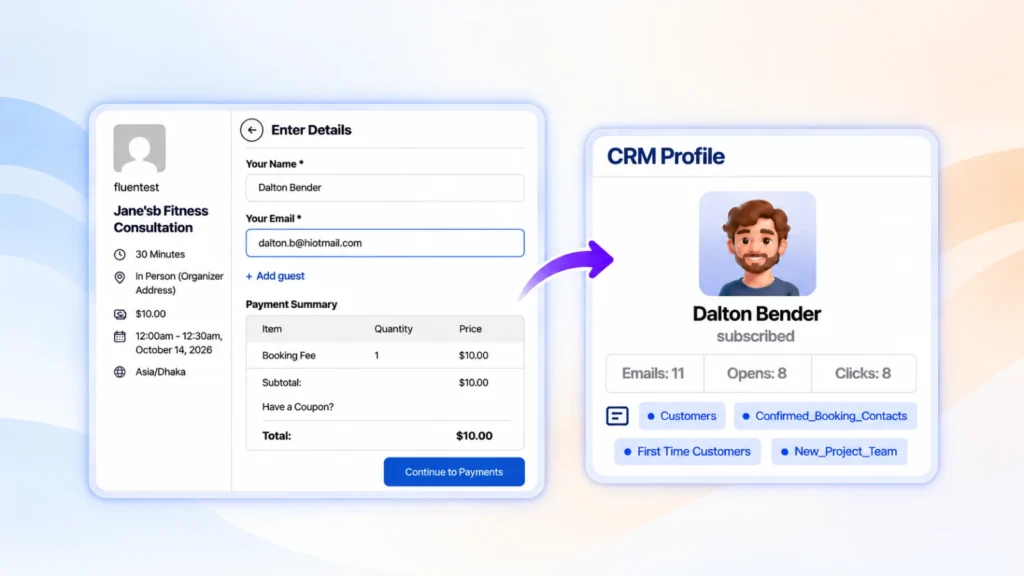
Still Sending Follow-up Emails Manually?
Sync FluentBooking with FluentCRM and save your time from the manual follow-up and winback your customers!

Reduce Friction in the Booking Journey
Every additional step between discovering your salon and confirming an appointment increases the chance of losing a customer.
Imagine a potential client visits your website at 10:30 PM. If they have to wait until the next morning to call or message your salon, they may simply choose another business.
Providing online appointment booking allows customers to schedule services whenever it’s convenient for them.
Combined with automated confirmations and reminders, this creates a smoother experience while reducing administrative work for your staff.
Ultimately, great marketing doesn’t end when someone books an appointment: it continues until they become a loyal advocate for your salon.
Plan Your Salon Operations
A salon can have excellent marketing and still struggle if daily operations are inefficient. Double bookings, inventory shortages, inconsistent service quality, and poor staff coordination can quickly damage your reputation.
Your salon business plan should therefore explain how the business will operate every day, not just how it will attract customers.
Strong operations create consistency, and consistency builds trust.
Build the Right Team
Your employees represent your brand every time they interact with a customer.
Depending on your business model, your team may include:
- Salon manager
- Hairstylists
- Makeup artists
- Nail technicians
- Beauty therapists
- Reception staff
Beyond technical skills, look for professionals who communicate well, work collaboratively, and prioritize customer satisfaction.
Your business plan should also establish clear expectations regarding:
- Roles and responsibilities
- Work schedules
- Customer service standards
- Training and development
- Performance evaluation
- Incentive programs
Investing in your team often produces better long-term returns than investing in expensive décor alone.
Manage Equipment and Inventory Efficiently
Running out of essential products can disrupt appointments and create a poor customer experience.
Prepare an inventory plan covering:
- Hair products
- Skincare products
- Nail supplies
- Cleaning materials
- Retail products
- Disposable items
Regular inventory reviews help reduce waste while ensuring your team always has the supplies needed to deliver quality service.
Similarly, plan for equipment maintenance to avoid unexpected downtime.
Design a Consistent Customer Journey
Every successful salon follows a repeatable customer experience.
A typical journey looks like this:

- Customer discovers your salon
- Books an appointment
- Receives confirmation
- Visits the salon
- Receives consultation
- Enjoys the service
- Completes payment
- Receives follow-up communication
- Book the next appointment
The smoother this journey becomes, the more likely customers are to return.
Use Technology to Improve Operations
Many salon owners spend hours every week answering booking requests, updating calendars, and following up with customers.
These manual processes consume valuable time that could be spent serving clients or growing the business.
Modern appointment management systems can help by:
- Accepting bookings 24/7
- Managing staff availability
- Preventing double bookings
- Sending automated reminders
- Syncing calendars
- Supporting online payments
- Generating booking reports
Instead of replacing human interaction, technology supports your team by automating repetitive administrative tasks.
As your salon grows, these efficiencies become increasingly important for maintaining profitability.
Create a Financial Plan for Your Salon Business
A strong financial plan transforms your salon business plan from an idea into a practical strategy.
Many businesses fail not because demand is low, but because owners underestimate expenses or overestimate revenue.
Your financial plan should answer three critical questions:
- How much will it cost to start?
- How much will it cost to operate?
- How will the business generate sustainable profit?
Estimate Startup Costs
Typical startup expenses include:
- Rent or lease deposits
- Renovations and interior design
- Salon furniture
- Professional equipment
- Initial inventory
- Licenses and permits
- Website development
- Branding and marketing
- Insurance
- Working capital
Creating a realistic budget helps prevent cash flow problems during the early months.
Calculate Operating Expenses
Your monthly operating costs may include:
- Rent
- Salaries
- Utilities
- Marketing
- Software subscriptions
- Product replenishment
- Maintenance
- Taxes
- Insurance
Understanding these expenses allows you to establish pricing that supports long-term profitability.
Forecast Revenue Realistically
Revenue projections should be based on assumptions you can justify.
Consider factors such as:
- Average appointments per day
- Average service value
- Operating days per month
- Retail sales
- Membership revenue
For example:
- 18 appointments/day
- Average ticket: $50
- 26 operating days/month
Estimated monthly service revenue:
18 × $50 × 26 = $23,400
From this amount, subtract your operating expenses to estimate projected profit.
Avoid overly optimistic assumptions. Conservative forecasting creates a stronger business plan and better decision-making.
Understand Your Break-even Point
Your break-even point represents the amount of revenue needed before your salon begins generating profit.
Knowing this helps answer questions such as:
- How many appointments must we book each month?
- How much revenue should each stylist generate?
- What occupancy rate should we target?
These metrics allow you to monitor performance and adjust your strategy before small problems become major ones.
A Mini Salon Business Plan Example
To bring everything together, here’s a simplified example:
Business Name: Glow Studio Salon
Target Audience: Working professionals aged 25–45
Core Services: Hair styling, hair coloring, facials, bridal makeup
Unique Selling Proposition: Premium service with seamless online booking and personalized memberships
Marketing Strategy:
- Local SEO
- Instagram content
- Referral program
- Email campaigns
Revenue Goal:
- 450 appointments per month
- Average booking value: $48
Growth Plan:
- Launch membership program within six months
- Increase repeat customer rate to 60%
- Expand premium service offerings in year two
Notice that this example focuses on actionable business decisions rather than lengthy descriptions.
A great salon business plan isn’t simply a document you present to investors: it’s a roadmap you use to guide every decision your business makes.
Use Technology to Run a More Profitable Salon
In 2026, customers expect convenience just as much as quality service. They want to browse services, book appointments, receive confirmations, and pay without unnecessary back-and-forth communication.
For salon owners, this presents an opportunity. The right technology doesn’t replace your team, it allows your team to spend less time on administrative work and more time delivering exceptional customer experiences.
A modern salon business plan should therefore include a technology strategy alongside its marketing and financial plans.
Offer Online Appointment Booking
Many salons still manage appointments through phone calls, Facebook messages, WhatsApp, or Instagram DMs.
While manageable at first, these methods often lead to:
- Missed inquiries
- Double bookings
- Scheduling confusion
- Delayed responses
- Lost revenue
An online appointment booking system allows customers to:
- Book 24/7
- View available time slots
- Choose preferred services
- Select their preferred stylist
- Receive instant confirmation
- Control bookings with booking limits
Making booking easier increases the likelihood that potential customers become paying customers.
Check this article on how to create a salon booking system inside WordPress
Getting Messy
Automate Reminders to Reduce No-Shows
Every empty appointment slot represents lost revenue that cannot be recovered.
A customer forgetting an appointment affects:
- Staff productivity
- Daily revenue
- Customer satisfaction
- Overall profitability
Automated email and SMS reminders can significantly reduce these issues by keeping customers informed before their scheduled visit.
Instead of spending time making reminder calls, your team can focus on serving clients already in the salon.
Follow these tips and keep no-show appointments to a minimum level
Accept Online Payments and Deposits
Last-minute cancellations are expensive.
For premium services such as bridal makeup or lengthy hair treatments, requiring deposits or online payments can:
- Increase commitment
- Improve cash flow
- Reduce cancellations
- Simplify payment collection
Customers also appreciate flexible payment options that make the overall experience smoother.
Use Data to Make Better Business Decisions
Successful salons don’t rely on guesswork.
They monitor data such as:
- Total bookings
- Cancellation rate
- Popular services
- Peak business hours
- Customer retention
- Revenue per stylist
These insights help owners identify opportunities for improvement and allocate resources more effectively.
Technology should ultimately support one objective:
Helping your salon become more profitable while delivering a better customer experience.
Metrics Every Salon Owner Should Track
Many business plans focus on projected revenue but ignore the metrics that actually determine long-term success.
Tracking the right numbers allows you to identify problems early and make informed decisions.
- Average Booking Value: This measures how much a customer spends per appointment. Increasing this through service bundles or premium upgrades can improve revenue without increasing customer acquisition costs.
- Repeat Customer Rate: Returning customers are typically more profitable than first-time visitors. A strong retention strategy reduces marketing costs while creating predictable revenue.
- No-Show Rate: Even a small reduction in missed appointments can significantly increase monthly income. Monitor this metric and implement reminder systems if necessary.
- Appointment Occupancy Rate: This measures how effectively your available appointment slots are being utilized. A fully booked salon with profitable pricing generally performs better than one relying on discounts to attract customers.
- Customer Lifetime Value: Instead of asking, “How much did this customer spend today?” ask, “How much will this customer spend over the next three years?” This shift in thinking encourages investments in customer experience and loyalty programs.
- Revenue by Service Category: Analyze which services generate the highest profit rather than simply the highest demand. Some services may consume significant time while producing relatively low returns. Understanding this helps optimize your service portfolio.
Common Mistakes to Avoid When Writing a Salon Business Plan
Even well-intentioned entrepreneurs make mistakes that reduce their chances of success.
Here are some of the most common ones.
- Trying to Serve Everyone: A salon that targets everyone often struggles to differentiate itself. Instead, define a clear niche and build your brand around it.
- Competing Only on Price: Lower prices may attract customers initially, but they often reduce profitability and create unrealistic expectations. Compete through value, experience, and service quality rather than price alone.
- Ignoring Customer Retention: Many owners spend heavily on acquiring new customers while neglecting existing ones. Loyal customers generate repeat revenue and valuable referrals.
- Overestimating Revenue: Optimistic financial projections may look impressive, but can create unrealistic expectations. Use conservative estimates supported by market research.
- Underestimating Operating Costs: Rent, utilities, salaries, marketing, software, maintenance, and inventory all impact profitability. Plan for unexpected expenses instead of assuming everything will go according to plan.
- Treating the Business Plan as a One-Time Document: Your salon business plan should evolve with your business. Review and update it regularly as you introduce new services, expand your team, or respond to changing market conditions.
A 30-Day Action Plan
Instead of spending months perfecting your business plan, focus on taking consistent action.
Week 1: Research
- Define your target audience
- Analyze competitors
- Evaluate potential locations
- Study local demand
Week 2: Strategy
- Finalize services
- Develop pricing
- Create your brand positioning
- Set business goals
Week 3: Financial Planning
- Estimate startup costs
- Calculate operating expenses
- Forecast revenue
- Determine your break-even point
Week 4: Launch Preparation
- Build your website
- Set up online appointment booking
- Create marketing campaigns
- Train your team
- Test your operational workflow
By the end of 30 days, you’ll have both a practical business plan and a clear roadmap for execution.
Conclusion
A successful salon isn’t built on talent alone: it is built on strategy, consistency, and smart decision-making. A well-crafted salon business plan provides the foundation for every important choice, from selecting your target audience and pricing your services to managing operations and forecasting growth.
Remember that your business plan is not a document to complete and forget. It should serve as a living roadmap that evolves alongside your salon. Review it regularly, measure your progress, adapt to market trends, and refine your strategy as your business grows.
Start with a clear plan, execute it consistently, and you’ll be in a much stronger position to build a salon that doesn’t just survive in 2026 but thrives for years to come.
Frequently Asked Questions
Aminul Islam Tuhin
Hi! Nice to meet you. I’m a guy who loves to explore, learn, and share knowledge. I spend most of my time catching up with marketing tips & tricks. When I’m not busy with any of these, you’ll find me with a book, exploring the city, or playing my favorite games.
Table of Content
Subscribe To Get
WordPress Guides, Tips, and Tutorials




Add your first comment to this post