


How to Open a Yoga Studio (Step-by-Step Guide for a Profitable Business)


If you’ve gone from yoga student to experienced instructor, there may come a point when teaching classes no longer feels like enough, and you start thinking about opening a yoga studio of your own. A space where students feel welcome, community grows, and your passion becomes a real business.
The good news? The demand is there. The global yoga market was valued at nearly $127 billion in 2025, while the broader Pilates and yoga studios market reached around $120.9 billion in 2024 and is projected to grow to more than $520billion by 2035, showing just how fast wellness-focused businesses are expanding.
This guide breaks down how to open a yoga studio step by step, from choosing your niche and setting up your space to managing appointments, memberships, and long-term growth.
Quick Overview: What You Need to Open a Yoga Studio
| Area | What You Need |
| Business Setup | Registration, licenses, insurance |
| Operations | Scheduling, bookings, payments |
| Studio Setup | Space, equipment, furniture |
| Team | Certified instructors + staff |
| Growth | Website, marketing, memberships |
How to Start a Yoga Studio: 15 Step-by-Step Guide for Success
- Make Your Yoga Studio Idea and Specialty
- Research Your Local Market and Competitors
- Check Teacher Certifications and Legal Requirements
- Make a Simple Business Plan
- Arrange Your Budget and Register Your Business
- Choose the Best Location for Your Studio
- Set Up Your Studio Space and Buy Essential Equipment
- Get the Right Insurance for Your Studio
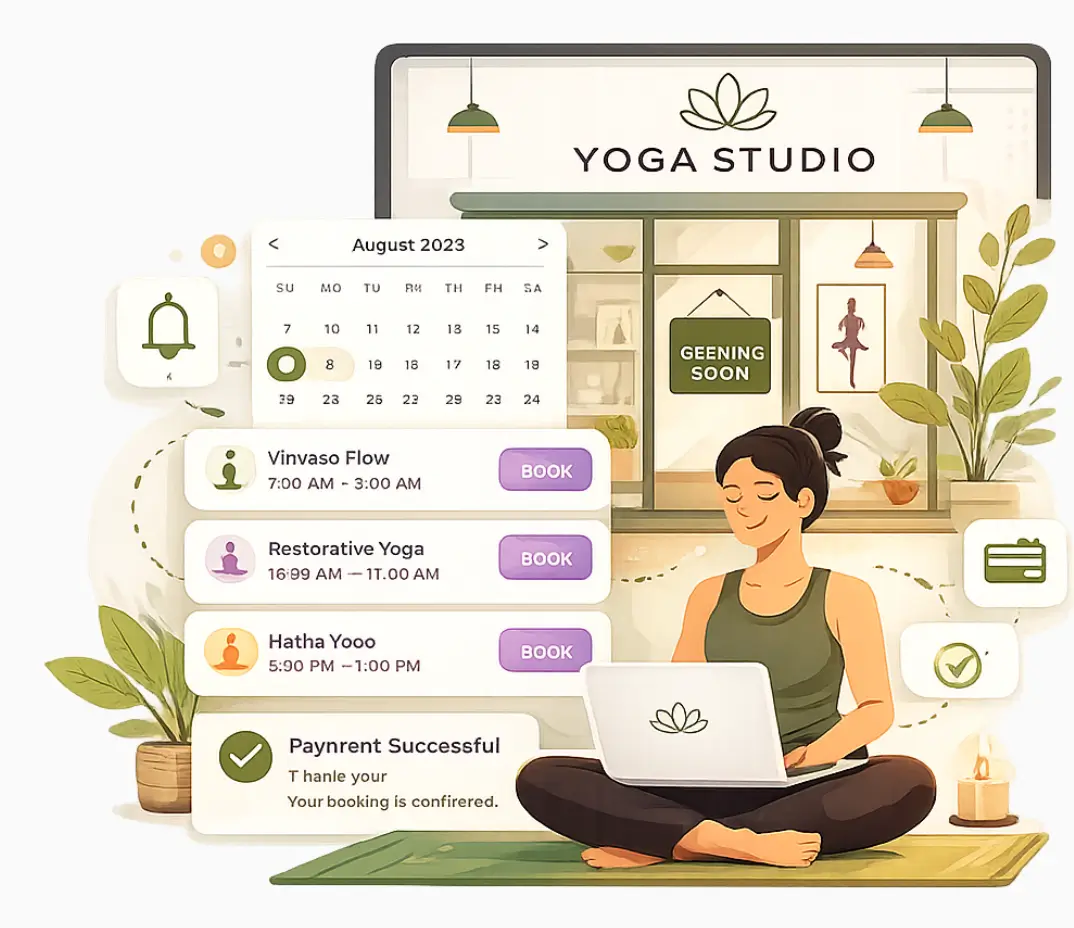
- Create Your Class Schedule and Booking System
- Hire Yoga Teachers and Support Staff
- Build Your Website and Online Presence
- Add Extra Income Sources Beyond Classes
- Plan Your Marketing Before Launch
Opening a yoga studio requires more than a passion for yoga; it takes careful planning, smart business decisions, and systems that help your studio run smoothly every day. From defining your niche to building a strong booking experience, every step shapes your long-term success.
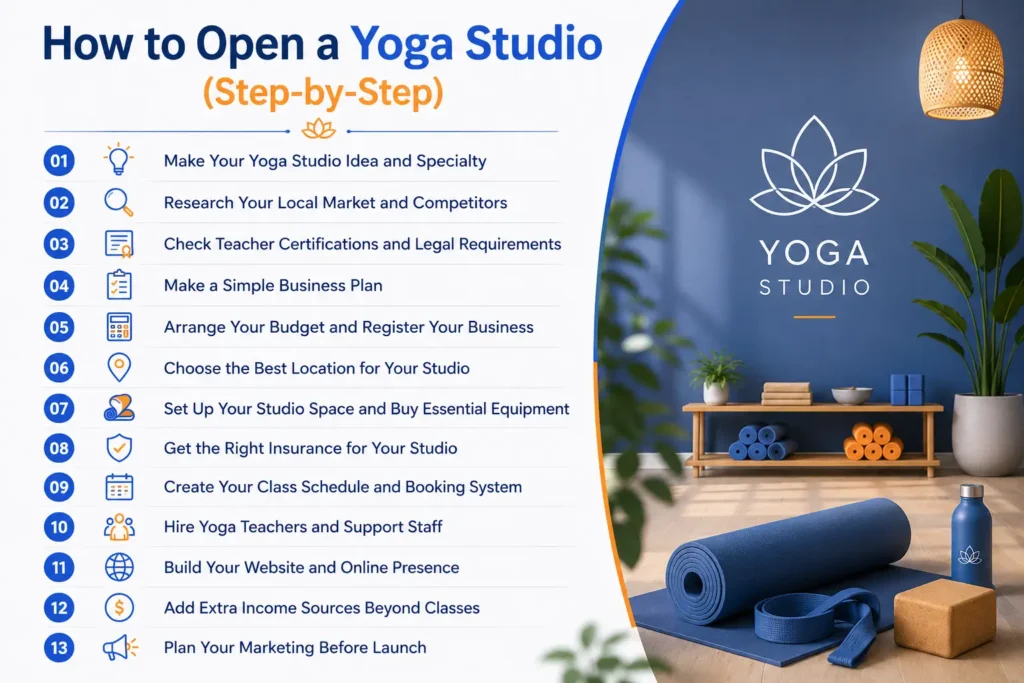
Here’s a complete step-by-step guide to help you launch a profitable and sustainable yoga studio, combining practical business planning with real operational needs like scheduling, memberships, and client retention.
1. Define Your Yoga Studio Ideas and Specialty
Before you get started, decide what kind of yoga studio you want to create and what will make it different.
Start by asking yourself: Who do I want to help, and what kind of experience do I want to create?
Will you focus on energetic classes like Vinyasa, Ashtanga, or hot yoga? Or will your studio be more beginner-friendly with gentle Hatha, restorative yoga, or prenatal sessions?
You can choose from:
- Hatha yoga
- Vinyasa yoga
- Hot yoga
- Prenatal yoga
- Yoga for seniors
- Private 1:1 sessions
- Corporate yoga
- Online or hybrid classes
You also need to decide the overall feel of your studio. Do you want it to feel like a peaceful spiritual space, a fitness-focused studio, or a strong community wellness center?
Your yoga style and studio vibe help shape important business decisions like:
- your target audience
- class schedule
- pricing strategy
- studio design
- marketing and branding
For example, working professionals may prefer evening power yoga classes, while seniors may look for slower daytime sessions.
When you clearly define your niche from the beginning, it becomes much easier to build a studio that attracts the right students.
2. Research Your Local Market and Competitors
Before opening your studio, take time to understand your local yoga market.
Visit nearby yoga studios, gyms, and wellness centers to see what they offer. Check their class types, pricing, membership plans, class timings, and how they attract students.
Pay attention to questions like:
- What types of yoga classes are most popular?
- Are studios focused on beginners or advanced students?
- What are they charging for memberships and drop-in classes?
- Which class times are usually full?
- What do students complain about in reviews?
This helps you understand what is already working and where there is room for improvement.
Look for gaps in the market.
Maybe your area has many fitness-focused studios but no beginner-friendly yoga space. Maybe people want flexible evening classes, private sessions, or easier online booking options.
Your goal is not to copy competitors, it is to find what they are missing and do it better.
Good market research helps you make smarter decisions about your pricing, schedule, services, and studio positioning before you invest money.
3. Check Teacher Certifications and Legal Requirements
You don’t need a certification to open and run a yoga studio. But if you’re not a licensed instructor yourself, it’s a smart idea to work with experienced yoga teachers or have certified instructors in leadership roles. This helps with decision-making, builds trust, and gives your studio more credibility.
If you plan to teach classes yourself, most studios prefer instructors with a 200-hour yoga teacher training certification that meets Yoga Alliance standards.
This training helps you learn:
- teaching techniques
- yoga anatomy
- class structure
- yoga philosophy
- different yoga styles like Hatha and Vinyasa
If you want to offer special classes like hot yoga, prenatal yoga, Yin yoga, or aerial yoga, you may need extra certifications for those as well.
You should also consider CPR and first aid certification to create a safer environment for students during physical activities.
Having proper certifications not only improves teaching quality but also helps with insurance approval and gives students more confidence in your studio.
4. Make a Simple Business Plan
A business plan helps turn your yoga studio idea into a real and profitable business.
It outlines your vision, short-term and long-term goals, market research, and financial planning. This gives you a clear roadmap for how your studio will run and grow. It also helps if you need funding from investors, bank loans, or business partners.
Before choosing a location, your business plan should cover these key areas:
Services and Pricing
Decide what you will offer and how your studio will make money.
For example:
- drop-in yoga classes
- class packages
- monthly memberships
- private 1:1 sessions
- online yoga classes
- workshops and retreats
- teacher training programs
You should also plan your class schedule, membership options, and pricing structure clearly.
Revenue Forecast
Estimate your startup costs and monthly expenses, such as:
- rent and renovation
- yoga equipment
- instructor salaries
- utilities
- insurance
- marketing and advertising
Then compare those costs with your expected income from classes, memberships, and retail sales.
This helps you calculate how many students or memberships you need each month to break even and start making a profit. A strong business plan helps you make smarter decisions before spending money on your studio space, equipment, or team.
5. Arrange Your Budget and Register Your Business
Before opening your yoga studio, you need to secure your funding and complete the legal setup. Start by calculating your startup costs, including rent deposits, renovation, yoga equipment, instructor salaries, insurance, website setup, and marketing expenses.
Once you know your budget, decide how you will fund the business. Common options include:
- personal savings
- bank loans
- business partners
- private investors
- small business funding programs
After securing funding, register your business properly for taxes and liability protection. You can choose a business structure like:
- sole proprietorship
- partnership
- LLC (Limited Liability Company)
Many studio owners prefer an LLC because it helps separate personal and business liabilities. You may also need:
- tax identification number (EIN)
- local business license
- zoning approval
- health and safety permits
Handling your funding and legal setup early helps your studio start on a strong and secure foundation.
6. Choose the Best Location for Your Studio
Choosing the right location can directly affect your yoga studio’s success. Look for a place that is convenient for your target students. A good studio should have easy access, enough parking, good foot traffic, and public transport nearby.
Ask yourself:
- Is the studio easy to find?
- Is there enough parking available?
- Can students reach it easily by public transport?
- Does the area match your target audience?
Inside the space, focus on size and layout. You need at least one dedicated practice room where students can comfortably place their mats and move freely without feeling crowded.
Also, make sure the space has:
- good ventilation
- non-slippery and easy-to-clean flooring
- natural light, if possible
- a small reception or waiting area
- storage for mats and props
- washrooms and changing rooms
If you plan to offer hot yoga, proper ventilation becomes even more important.
Before signing a lease, calculate renovation costs like mirrors, painting, sound systems, and interior setup. Try to negotiate a lease that gives your business enough time to grow, usually around three to five years.
A good location makes it easier to attract students and build long-term memberships.
7. Set Up Your Studio Space and Buy Essential Equipment
Outfit your studio with the right equipment and supplies so classes run smoothly and students feel comfortable from the moment they arrive. Start by making a list of what you and your students will need, including these essentials:
- Yoga Mats and Props: Even though many students bring their own mats, keep a good supply of high-quality yoga mats for class use or rentals. You should also stock helpful props like yoga blocks, bolsters, straps, and blankets. These make classes more comfortable for beginners and support students with different flexibility levels.
- Studio Furniture: Create a simple check-in area where students can sign in, ask questions, and make payments. You may also need: reception desk, storage cubbies or lockers, shoe racks, seating area, or waiting bench. A small waiting area helps students feel welcomed before and after class.
- Sound System: Music helps set the mood for your yoga sessions and shapes the overall studio experience. Whether you prefer calm meditation sounds or energetic workout playlists, invest in a sound system that is clear, reliable, and easy to control during class. A Bluetooth speaker setup or remote-controlled system works well for most studios.
- Lighting and Décor: The design of your studio creates the first impression. Use soft lighting, mirrors, peaceful wall décor, and calming colors to create a relaxing environment. Natural light, dimmable lights, and simple design choices can make your space feel more inviting.
- Cleaning Supplies and Daily Essentials: Cleanliness matters in every yoga studio. Keep these ready: yoga mat cleaners, disinfectant wipes, hand sanitizer, floor cleaning supplies, water station or tea area, cups, and recycling bins.
A clean and organized studio builds trust and improves the student experience.
8. Get the Right Insurance for Your Studio
Before opening your doors, protect your business and your students with the right insurance. Running a yoga studio involves physical activity, equipment, employees, and customer safety, so having proper coverage is essential.
Here are the main types of insurance to consider:
- General Liability Insurance: This covers injuries that happen inside your studio. For example, if a student slips on the floor or gets hurt while using studio equipment, general liability insurance helps cover legal and medical costs.
- Professional Liability Insurance: Also called instructor liability insurance, this protects you if a student claims they were injured because of your teaching or guidance during class. This is especially important if you or your instructors actively teach sessions.
- Property Insurance: This protects your studio space and everything inside it, including mats, props, furniture, sound systems, and other equipment. It can help cover damage caused by fire, theft, or vandalism.
- Workers’ Compensation Insurance: If you hire staff or full-time instructors as employees, many locations require workers’ compensation insurance by law. This covers workplace injuries for your team members.
Many landlords also ask for proof of insurance before signing a lease, so don’t leave this step until the last minute. Having the right insurance protects your business, builds trust, and gives you peace of mind as your studio grows.
9. Build Your Website and Online Presence
A professional website is essential for a successful yoga studio.
Most students will discover your studio online first, so your website should make a strong first impression and make booking simple.
Your website works like your 24/7 front desk, marketing tool, and booking platform all in one.
It should include:
- class schedule
- class descriptions
- pricing and membership options
- about page
- instructor profiles
- online booking system
- testimonials
- FAQ section
- contact details
- Google Maps location
- high-quality studio photos
Make sure your website is mobile-friendly, since many students will book classes from their phones. If you use Google Calendar for managing availability, knowing how to fix Google Calendar sync issues can prevent missed appointments and scheduling conflicts.
You should also focus on local SEO by using search terms like “yoga studio near me” or “best yoga classes in [your city]” so people can find your business more easily.
Social media is also important. Platforms like Instagram, Facebook, and YouTube help you share class updates, student success stories, behind-the-scenes content, and promotions.
A strong online presence helps build trust before students even walk into your studio.
10. Create Your Class Schedule and Booking System
A smooth scheduling system is one of the most important parts of running a successful yoga studio. Even great classes can struggle if bookings feel confusing, students forget appointments, or your calendar becomes difficult to manage.
Start by planning your weekly class schedule based on your target audience and their availability. For example:
- Morning yoga for early risers
- evening classes for working professionals
- weekend workshops
- private 1:1 sessions
- recurring group classes
- corporate wellness sessions
You should also decide what types of bookings you want to offer. This may include:
- drop-in classes
- monthly memberships
- class packages
- private yoga sessions
- consultation calls
- workshops and retreats
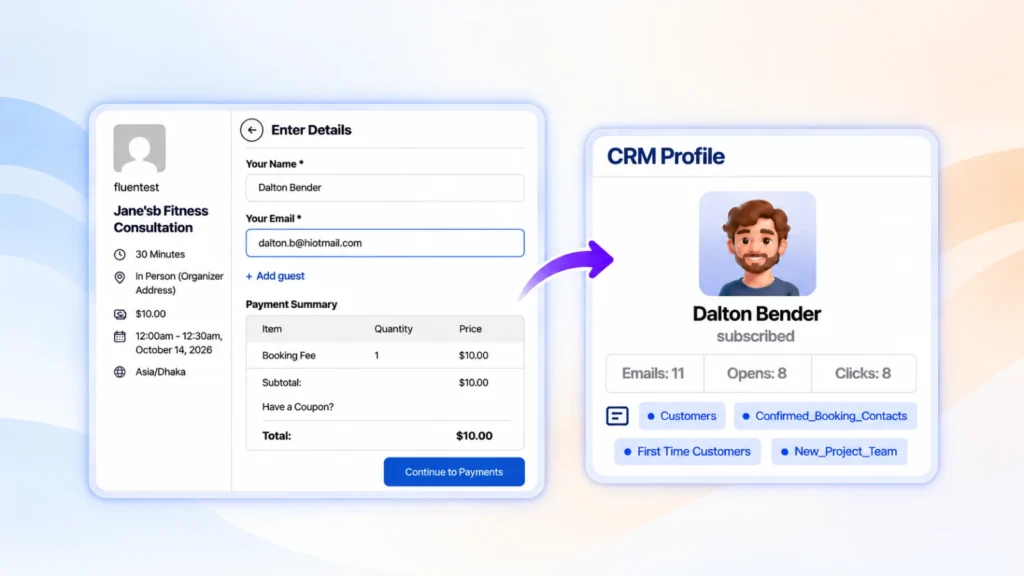
There are many scheduling tools available for yoga studios. If you’re running your studio on WordPress, FluentBooking helps you manage appointments, recurring classes, payments, and automated reminders without paying monthly SaaS fees.
It helps you manage appointments, automate confirmations and reminders, handle team scheduling, accept payments, and keep everything synced with your calendar, all from your own website without relying on monthly SaaS tools.
Using the right system can also help you reduce no-show appointments and improve long-term client retention.
11. Hire Yoga Teachers and Support Staff
Unless you plan to teach every class yourself, you’ll need the right team to help run your studio smoothly. Good instructors and reliable support staff directly affect your student experience, retention, and overall business growth.
Yoga Teacher
Look for teachers who have proper certifications, teaching experience, and strong communication skills. Most studios prefer instructors with at least a 200-hour yoga teacher training certification and experience in the styles your studio offers, such as Hatha, Vinyasa, hot yoga, or prenatal yoga.
When hiring, pay attention to:
- teaching style
- class energy
- personality fit
- student connection
- reliability and availability
You can even ask potential instructors to lead a demo class before hiring them.
Support Staff
As your studio grows, you may also need help with daily operations. This can include:
- front desk staff
- studio manager
- cleaning staff
- marketing support
- customer service assistance
A receptionist or studio manager can handle bookings, payments, student questions, and check-ins while you focus on teaching and growing the business.
Having a dependable team helps your studio run smoothly even when you’re not there.
12. Add Extra Income Sources Beyond Classes
Relying only on regular yoga classes can limit your studio’s growth. Adding extra income sources helps create more stable revenue and makes your business stronger during slower seasons.
One of the easiest ways is to offer different membership and pricing options. This can include:
- monthly memberships
- class packages
- private 1:1 coaching
- online yoga classes
- workshops and retreats
- teacher training programs
You can also sell products inside your studio or through your website, such as:
- yoga mats
- water bottles
- branded apparel
- wellness products
- meditation accessories
These products not only bring extra income but also help strengthen your brand.
Another great option is offering corporate wellness programs for companies that want yoga sessions for employees. You can also create digital products like recorded classes, yoga guides, or downloadable wellness plans for passive income.
Multiple revenue streams help your studio stay profitable and reduce the pressure of depending only on class bookings.
13. Plan Your Marketing Before Launch
A strong yoga studio marketing plan helps you grow your student base and build a real community around your yoga studio.
Marketing should start before your studio officially opens, so people already know your brand before your first class begins.
Build Your Brand Identity
Strong branding helps your studio stand out. Choosing the right name is the first step in building a strong brand.
If you’re still deciding, these yoga studio name ideas can help you find a name that matches your vision and attracts the right students. Use your vision and unique selling point to create a clear brand identity, including:
- studio name
- logo
- colors and design style
- fonts and visual style
- brand voice and personality
Your branding should match your studio’s vibe, whether it feels peaceful and spiritual, modern and fitness-focused, or warm and community-driven. Use the same branding across your website, social media pages, and printed materials.
Use Social Media
Meet your students where they already spend time: Instagram, Facebook, TikTok, and YouTube. Share content like:
- class schedules
- yoga tips
- student testimonials
- behind-the-scenes content
- short yoga tutorials
- launch announcements
Posting consistently helps people discover your studio and builds trust before they even visit. You can also work with local creators or encourage students to tag your studio online.
Offer Promotions and Referral Programs
Word-of-mouth marketing is one of the best ways to attract new students. You can encourage this by offering:
- first class free
- discounted intro memberships
- founder member offers
- referral rewards for existing students
For example, a student could get a free class or a small gift for bringing a friend.
Host Community Events
Build stronger local connections by organizing events beyond regular classes. This can include:
- free yoga sessions in the park
- weekend workshops
- charity yoga events
- wellness collaboration events
- local business partnerships
You can also partner with cafés, spas, gyms, or wellness shops for cross-promotion.
Use Email Marketing
Collect emails through your website or in-studio and send regular updates. Your emails can include:
- class schedules
- new instructor announcements
- special promotions
- event invitations
- helpful yoga tips
Email helps you stay connected and improves long-term student retention. You can also use some event reminder email templates to make your communication faster and more professional. Track your results over time to see what brings the most students. A mix of social media, referrals, local events, and email marketing usually creates the strongest growth.
14. Focus on Solutions, Not Just Problems
Challenges are part of running any business, and a yoga studio is no different.
You’ll deal with class cancellations, staff issues, low attendance, scheduling conflicts, and unexpected expenses. The goal is not to avoid problems—it’s to solve them quickly and wisely. Instead of focusing only on what’s going wrong, train yourself and your team to think in solutions.
For example, if students are missing classes, look for ways to improve reminders and follow-ups. If your schedule feels too crowded, adjust class timings instead of letting frustration grow.
Encourage your staff and teachers to do the same. If someone points out a problem, ask them to also suggest a possible solution. This creates a stronger team culture and helps everyone take ownership of improving the studio.
Different people bring different perspectives, and often the best ideas come from the people working closest to the daily operations. A successful studio grows faster when the team focuses on fixing problems, not feeding them.
15. Be Real and Stay Flexible
Running a yoga studio is not always peaceful playlists and good vibes. As a studio owner, you need to stay positive, but you also need to be honest with yourself about what is working and what needs improvement.
Look closely at your teachers, staff, location, pricing, and daily operations. Some things will go smoothly, and some won’t. Instead of ignoring problems, treat them as opportunities to improve.
Maybe your class timings need adjustment. Maybe your pricing isn’t working. Maybe students love your classes, but struggle with your booking system. Fix what you can, stay patient with what takes time, and keep improving step by step.
Also, celebrate small wins, your first fully booked class, your first loyal members, or your first strong month of recurring bookings. Building a successful yoga studio takes time, and growth rarely happens perfectly.
Stay grounded, stay practical, and remember why you started in the first place—to create a space where people can feel better, move better, and grow together.
Tips for Running a Successful Yoga Studio
Opening your yoga studio is only the beginning. Long-term success comes from how well you manage your daily operations, student experience, and business growth.
These simple but powerful tips can help you build a stronger studio, improve retention, and create a business that lasts.
- Start Small and Scale Gradually: You don’t need a huge studio or a full class schedule on day one. Start with a smaller setup, test demand, and grow as your student base becomes stronger.
- Focus on Building a Strong Community: People stay for more than yoga classes; they stay for connection. Build trust, create a welcoming environment, and make students feel like they belong.
- Prioritize Student Safety and Studio Compliance: Make sure your studio follows local safety rules, fire regulations, and health standards. A safe and professional space builds trust and protects your business.
- Create Smooth Systems for Booking and Operations: Easy scheduling, reminders, and payment systems improve the student experience and reduce daily stress. Strong systems help your studio run better as it grows.
- Use recurring appointments: A proper system also helps with recurring appointment scheduling and long-term membership management.
- Stay Consistent with Marketing and Member Retention: Getting new students is important, but keeping them matters more. Stay active with email, social media, and follow-up communication to build long-term loyalty.
Success in the yoga business doesn’t happen overnight. It grows through consistency, smart systems, and strong relationships with your students.
When you focus on community, smooth operations, and long-term value instead of quick results, your yoga studio becomes more than a business; it becomes a place people truly want to return to.
Your Yoga Studio Starts with the Right Systems
Opening a yoga studio is more than starting a business, it’s creating a space where people come to feel better, move better, and build real community.
But success doesn’t come from great yoga classes alone. It comes from smart planning, the right location, strong pricing, reliable teachers, smooth scheduling, and systems that keep students coming back.
Start simple. You don’t need a huge studio or a perfect setup on day one. Many successful studio owners begin small, learn what their students need, and grow step by step. Focus on creating a great experience, from the first website visit to the final savasana.
And most importantly, build strong systems before you scale. When your bookings, memberships, reminders, and student communication run smoothly, your studio becomes easier to manage and far more profitable.
With the right strategy, your yoga studio can become more than a place for classes; it can become a long-term business, a thriving wellness community, and a space people truly want to return to.
Frequently Asked Questions
Ratul Hasan Ripon
I enjoy making complex ideas simple and engaging through my writing and designs. With a strong knowledge on content writing and SEO, I create technical content that’s both easy to understand and interesting.
Table of Content
Subscribe To Get
WordPress Guides, Tips, and Tutorials





Add your first comment to this post